Table of Contents
White County Courts, IL *

White County is located in the southernmost stretch of Illinois along the Wabash River, which forms the border between Illinois and Indiana. The county's legal and governmental hub is in Carmi. The county has a population of approximately 14,000 residents who depend on the courts for all their legal issues. Because of its small size, the court structure operates on a smaller scale than in other urban counties in Illinois.
County residents are served by one Circuit Court at the trial level, which handles all legal issues affecting the people. Cases here range from minor civil and traffic violations to serious felony level criminal cases and major civil matters. Having some basic knowledge of how the court operates can help reduce the stress and time wasted when seeking justice. Residents who know where to get court records and free legal help are a step ahead in ensuring a seamless court process.
Overview of the White County Court System
The people of White County get their legal services from the Second Judicial Circuit, which also serves Richland, Edwards, Crawford, Gallatin, Franklin, Hamilton, Jefferson, Hardin, Lawrence, and Wabash Counties. All courts within the circuit share the same administrative unit and judges, but each has its own courthouse and Court Clerk. All the courts in the different counties are governed by the Second Judicial Circuit, meaning they follow the same rules and procedures when hearing cases.
Counties in the state of Illinois use the unified court system, including White County. This means the structure has a single court at the trial level that handles all legal issues in the county. The Circuit Court handles all cases that affect the people. To ensure the process is seamless, it has divided the responsibilities into divisions, with each one handling its own court type. For this reason, all the court activities take place at the White County Courthouse. It houses all the offices and the Circuit Clerk, who handles administrative duties.
Types of Courts in White County, Illinois

White County uses a unified court structure with a single trial-level court that handles all legal issues affecting its people. The White County Circuit Court handles all legal issues, ranging from minor traffic infractions to serious felony-level cases. To achieve swift results, the court has been divided into several divisions, each dealing with a different type of case. Below are the divisions and their jurisdiction.
Primary Location: White County Courthouse
 Criminal Division
Criminal cases prosecuted by the state of Illinois are handled by the Criminal Division of the Circuit Court. The cases have serious implications, often resulting in incarceration, so the defendant must ensure they present their case as well as possible. The cases here are:
- Simple and aggravated battery
- Drug trafficking
- Theft over a certain dollar amount
- Weapons charges
- Retail theft
- First-offense DUI
- Trespassing
Due to the seriousness of the matters in this division, the defendants must have a lawyer to represent them. Those who cannot afford one have the option to apply for a public defender to represent them.
 Civil Division
The Civil Division handles non-criminal matters between private parties, such as individuals, businesses, and organizations. In most cases, they involve money and property. The division has jurisdiction over:
- Personal injury lawsuits
- Breach of contract claims
- Landlord-tenant evictions
- Property disputes
- Civil harassment matters
Unlike in criminal cases, the people are allowed to represent themselves in this division. The parties need to prepare thoroughly to avoid the risk of injustice. Cases are handled separately from those of major civil matters at the Circuit Court, while chancery matters (where damages are not monetary but affect policy instead) are handled at the small claims court.
 Probate Division
The Probate Division handles legal matters related to the estates of deceased individuals. It takes care of administering the deceased's estate or dividing property when no will was left. The court is responsible for handling:
- Estate issues
- Guardianship cases
- Conservatorship matters
Guardianship cases can involve the appointment of a legal guardian for a minor or for a person who is incapacitated and lacks the capacity to make sound decisions.
 Family Division
The matters that affect children and families are taken care of by the family division. The cases include:
- Divorce and legal separation cases
- Child custody and visitation disputes
- Child support orders
- Adoptions
- Guardianship of minors
- Orders of protection
In Illinois, divorce is a no-fault case, meaning neither spouse needs to provide evidence of wrongdoing to be granted a divorce; irreconcilable differences are enough. Even then, matters like marital property, spousal maintenance, and matters affecting minor children can be a source of contention. It is important to note that the court takes Orders of Protection as an emergency, and one does not need to have a set court date to get a hearing in front of the judge.
 Juvenile Division
Child cases do not always involve delinquency. They might also be about welfare, dependency, and safety. In White County, matters involving minors aged 18 and below are handled by the Juvenile Division. Proceedings overseen by the assigned Circuit Court judge include:
- Misconduct among minors
- Drug possession and substance-related crimes
- Proceedings on child dependency
- Motions over authoritative intervention for some delinquencies
For misdemeanors and felonies among minors, the juvenile division seeks to reintegrate offenders into the community rather than punish them.
How to Access White County Court Records

Court records in White County are expected to be public, except for sealed cases, such as juvenile and certain family law cases involving children. Also, a judge can restrict a case for legal reasons. Access to court records can be through online means or in person, depending on the restrictions and search information available.
 Online Access
Residents can get access to court records online via re:SearchIL. Re:SearchIL is a good option to access records from the eFileIL system. It allows registered individuals to log in and search the case using the party's name and case number. The search information used must be accurate to avoid null records or incorrect results. For residents who may not have a computer at home, the county provides access terminals or kiosks in the courthouse that people can use to check court records, dockets, and other records.
 Alternative Online Options
Whenever the searcher lacks clarity about the court that filed the specific case, they might not be able to access the records on the official court website because access is limited to that location. CourtCaseFinder gives access to records in White County and beyond. By aggregating records from various court websites in Illinois and beyond, people can conduct a single search to access them. As much as the records are thoroughly researched and accurate, the most recent information may not be up to date. For this reason, it is important to verify the most recent information with the official court website.
 In-Person Requests
Residents who need copies of certified court case documents must visit the White County Courthouse to obtain them. Also, when one wants access to sealed records, such as those in juvenile matters and some family issues involving minors, they may not be available online. Access to such records may be obtained, if possible, through an in-person request at the Circuit Clerk's Office. When visiting, one is required to carry as much information about the case as possible. For instance, including the case number, the party's name, and the filing date will help staff quickly retrieve the information. Those who need certified documents must pay a fee that varies by record type.
 Archived Records
Old court records that predate the digital era might not be accessible online or through the Circuit Clerk's Office. When a resident needs an archived record, they can contact or visit the Circuit Clerk's Office, and staff will direct them to the appropriate records. If the records are not too old, they might not be at the office; instead, they might have been transferred to the Illinois Regional Archives Depository (IRAD), which has case files dating back to the 1800s. Once the records are located, they can be collected in person at IRAD or be sent via mail.
For Attorneys and Legal Professionals
Attorneys handling a White County case will primarily use the system to search records and case progress for the cases they have electronically filed themselves. For all Illinois civil cases, the Illinois Supreme Court requires that they be electronically filed with the circuit clerk's office through the eFileIL system, which submits documents via an approved Electronic Filing Service Provider. Criminal, traffic, and other quasi-criminal matters are still somewhat unique in their processes, so confirming with the clerk is important before submission, lest one receive a filing rejection.
An attorney who cannot use e-filing can opt for paper filing. They will need to present a Certificate of Exemption for E-Filing as per Illinois Supreme Court Rule 9(c)(4). As with any court filing, the submission must comply with the Illinois Supreme Court Rules and the local rules of the Second Judicial Circuit, and the filer must familiarize themselves with them. It addresses a lot of useful things, ranging from motion scheduling to formatting requirements for submitted documents. Having clarity would ensure they avoid petty mistakes that could affect their client's outcome.
How to File a Case in White County

For the courts to hear a case, one must file the case with the courts, following the correct steps. The state of Illinois allows people to file their cases without a lawyer, increasing the possibility of mistakes. For this reason, they must have basic knowledge of case filing. The general steps below can help simplify their process.
 Step 1: Choose the Correct Court
All counties in Illinois, including White County, have only one trial-level court, eliminating the option to choose among different courts. Instead, the court is divided into several divisions, each handling different case types. As a resident, one must choose among the Civil, Criminal, Juvenile, Family, and Probate divisions. Also, it is important to note that some serious cases are heard in the Circuit Court. Choosing the right division is a step towards a successful filing process.
 Step 2: Complete Required Forms
Once one determines the division, the next step is to identify the appropriate forms to fill out, depending on the matter at hand. Different types of cases use different forms. Illinois has standardized forms for common case types, which are accessible online on the Illinois Court Website at the forms page. Also, the Self-help resources at the 2nd Judicial Circuit have standardized forms on its official website. Lastly, the forms are available locally at the Circuit Clerk's Office. The staff will help the people through the process, but are not allowed to offer legal advice.
 Step 3: File the Case
Cases can be filed either in person at the Circuit Clerk's Office or online through the eFileIL system. It is mandatory to file civil cases online when done with a lawyer. Otherwise, the self-represented litigants can use the in-person option if they qualify for an exception. When visiting, the filer should carry extra copies and ensure that all are stamped by the Clerk. This will ensure they keep a copy for their records. Once filed, the Circuit Clerk will assign them a case number to track the case going forward.
 Step 4: Pay Filing Fees
When filing a case, the courts will require payment of a fee that varies by the type of case. Normally, small claims have lower fees than major civil cases. Those unsure can confirm the fee with the Circuit Clerk by phone or in person. If someone cannot afford the fee, they may file an Application to Sue or Defend as an Indigent Person. Those with lower incomes have a higher chance of qualifying.
 Step 5: Serve the Other Party
In Illinois, a case-filing process is not considered complete if the other party is unaware of the lawsuit. Service of process should be conducted legally to avoid rejection. In Illinois, service documents are prepared with the Circuit Clerk and the Sheriff's office, which delivers them at a cost. Also, the private process server or certified mail can be another option. Once done, a proof of service must be filed back with the court for the case to proceed.
 Step 6: Monitor the Case
Finally, having taken every step correctly, the court schedules the appearance dates, which parties must strictly adhere to. Noncompliance may lead to a default judgment, dismissal, or an arrest warrant. Use tools such as eFileIL or re:SearchIL to track the case. These platforms allow citizens to search for case information, such as the party's name, docket number, or date range, for free, and provide access to indexed case information.
White County Courthouse Directory
White County Courthouse
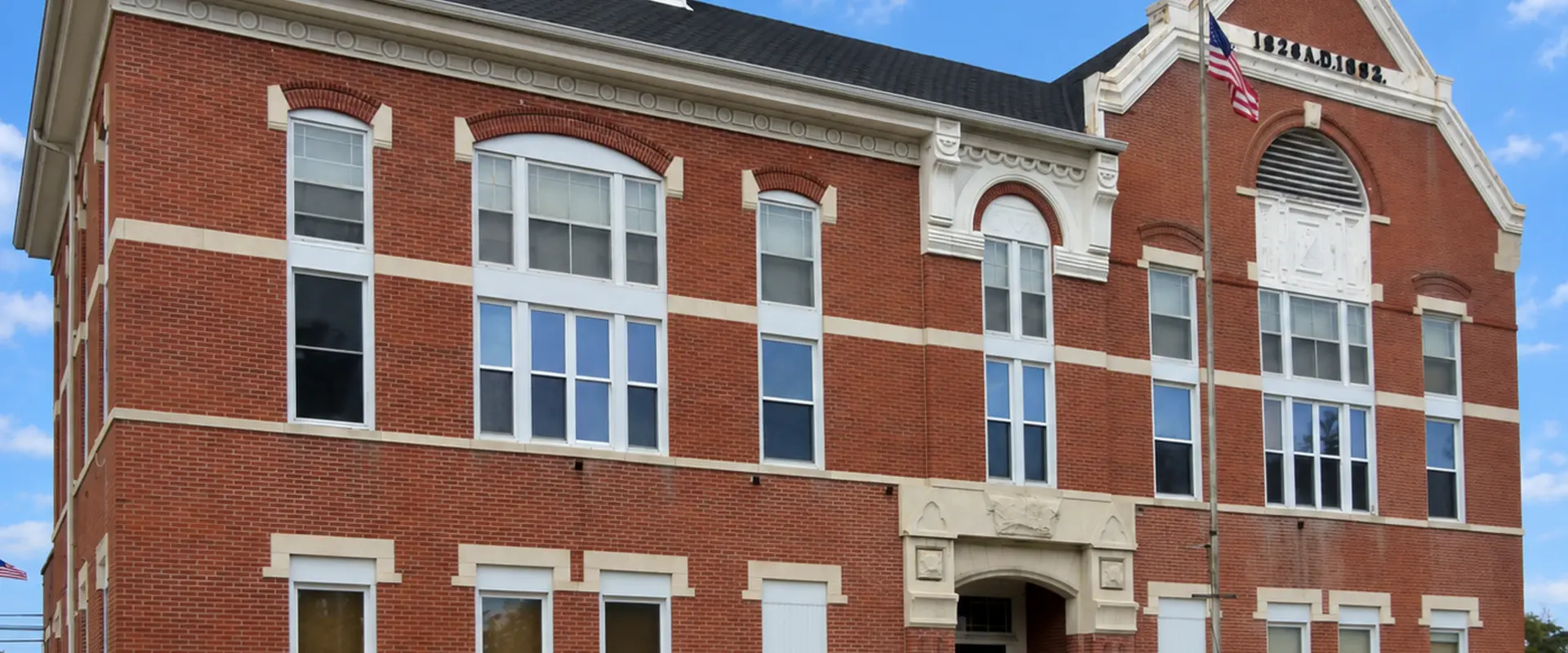
The courthouse hosts the Circuit Court and its divisions. All the court offices, including that of the Circuit Court Clerk's office, are also housed here.
Carmi
Address: 301 East Main Street, Carmi, IL 62821
Phone: (618) 382-2322
Website: whitecounty-il.gov
Legal Help and Self-Help Resources
With the growing number of people representing themselves in court, the need for free legal resources has risen. Many people end up making mistakes that could have been avoided with help. Below are some resources that they can consider.
 Free Legal Assistance
The people with low income can take advantage of the available resources, such as:
- Illinois Legal Aid Online is a statewide resource with plain-language guides and forms to help self-represented litigants navigate the legal process more quickly.
- Land of Lincoln Legal Aid helps low-income individuals with civil matters, including family law and housing, in central and southern Illinois.
- Illinois Armed Forces Legal Aid Network (IL-AFLAN) primarily handles civil cases involving retired and active-duty service members, advising them on benefits, discharge upgrades, and housing.
 Local Legal Support
At the local level, the people of White County have several resources that they can benefit from. The Second Judicial Circuit has standardized forms on its official website. Through partnerships with the Carmi Public Library and the Norris City Memorial Public Library District, they are not only able to provide forms but also provide guidance that helps self-represented litigants through their legal process. Also, the Circuit Clerk's Office has staff who are willing and available to help citizens through the process, but are not allowed to offer legal advice. Lastly, the Illinois State Bar Association can connect individuals with local attorneys at a reduced initial fee.
FAQs
What is the difference between the Circuit Clerk and the County Clerk in White County?
Many people confuse the two offices, yet they run independently of each other. The Circuit Clerk focuses on managing the court records and helps with the administration of the judicial branch. On the other hand, the County Clerk handles vital records, including birth and death certificates, marriage licenses, and real estate documents.
How does someone get a court date moved or continued in White County?
When one has a valid reason, they can file a motion for continuance through the Circuit Clerk. Waiting until the date of the hearing to file increases the chance of denial compared to filing earlier. Some of the acceptable reasons include a scheduling conflict, the need for additional time to prepare, or a medical situation. The judge has the power to accept or reject, depending on the reasons.
What happens if I cannot afford the filing fee for a civil case?
When filing a case, the court expects a fee to be paid when submitting the documents. But if someone cannot afford the fee, they may file an Application to Sue or Defend as an Indigent Person. Those with low income have a higher chance of qualifying.
When is it helpful to use a third-party records finder?
Third-party tools like CourtCaseFinder offer an alternative to accessing court records for the people of White County. The tool aggregates information from various court sites in Illinois and beyond, putting it in one place for broader search. The tool is very useful for people who are unsure which court a case was filed in.
Can one get a court record expunged or sealed in Illinois?
A lot is taken into account when determining whether the case should be sealed or expunged. According to the Illinois has set out rules in, 20 ILCS 2630/5.2 sets out rules that help to determine if a case qualifies or not. Some cases, like misdemeanor convictions, do not qualify for expungement but can be eligible for sealing after a long wait. Take time and read through the law to determine qualifications.
Other Counties in Illinois
- Adams
- Alexander
- Bond
- Boone
- Brown
- Bureau
- Calhoun
- Carroll
- Cass
- Champaign
- Christian
- Clark
- Clay
- Clinton
- Coles
- Cook
- Crawford
- Cumberland
- Dekalb
- Dewitt
- Douglas
- Dupage
- Edgar
- Edwards
- Effingham
- Fayette
- Ford
- Franklin
- Fulton
- Gallatin
- Greene
- Grundy
- Hamilton
- Hancock
- Hardin
- Henderson
- Henry
- Iroquois
- Jackson
- Jasper
- Jefferson
- Jersey
- Jo Daviess
- Johnson
- Kane
- Kankakee
- Kendall
- Knox
- La Salle
- Lake
- Lawrence
- Lee
- Livingston
- Logan
- Macon
- Macoupin
- Madison
- Marion
- Marshall
- Mason
- Massac
- Mcdonough
- Mchenry
- Mclean
- Menard
- Mercer
- Monroe
- Montgomery
- Morgan
- Moultrie
- Ogle
- Peoria
- Perry
- Piatt
- Pike
- Pope
- Pulaski
- Putnam
- Randolph
- Richland
- Rock Island
- Saint Clair
- Saline
- Sangamon
- Schuyler
- Scott
- Shelby
- Stark
- Stephenson
- Tazewell
- Union
- Vermilion
- Wabash
- Warren
- Washington
- Wayne
- Whiteside
- Will
- Williamson
- Winnebago
- Woodford
Table of Contents
