Table of Contents
Scott County Courts, IL *

Scott County is a small rural county of approximately 251 square miles located in west-central Illinois. Its county seat is Winchester, and the county was formed from Morgan County on February 16, 1839. Agriculture continues to play a significant role in the local economy.
Legal matters, including traffic tickets, criminal prosecutions, family law and disputes, probate issues, and civil cases, are heard in the Scott County court system. Scott County courts also make these court records public in many cases due to the Illinois uniform court system. Residents may find public court records for tenant screening, background checks for employment, family genealogy research, and verifying case statuses. An understanding of the court structure in Illinois and where certain records are kept will streamline the information-gathering process.
Overview of the Scott County Court System
There are three levels of courts: the Supreme Court, the Appellate Court, and Circuit Courts, where virtually all legal proceedings begin. Scott County is covered by the Scott County Circuit Court. The Scott County court is part of the Illinois 7th Judicial Circuit, which consists of Greene, Jersey, Macoupin, Morgan, and Sangamon Counties. Judges often serve in multiple counties in a judicial circuit in order to assist smaller counties in sharing court resources. Nearly all court records for the Scott County courts, whether criminal, civil, family, probate, or traffic cases, are maintained and managed by the Circuit Clerk.
The Circuit Clerk is responsible for maintaining all court records in the county, issuing summons and orders, impaneling jurors, and collecting fines. Other records may be kept at different county offices. For instance, birth, marriage, and death records are maintained by the County Clerk, and land records by the Recorder of Deeds.
Types of Courts in Scott County, Illinois

Knowing which courts to pursue records for will help avoid processing delays and the needless transfer of files between offices. In Scott County, it's uncomplicated, as the Scott County Circuit Court, the county's primary court, processes all case types under Illinois state law. Because it's a smaller county, Scott County does not have separate divisions of trial courts. Instead, all record types are managed by the county's Circuit Clerk under Illinois Supreme Court administrative standards.
 Circuit Court
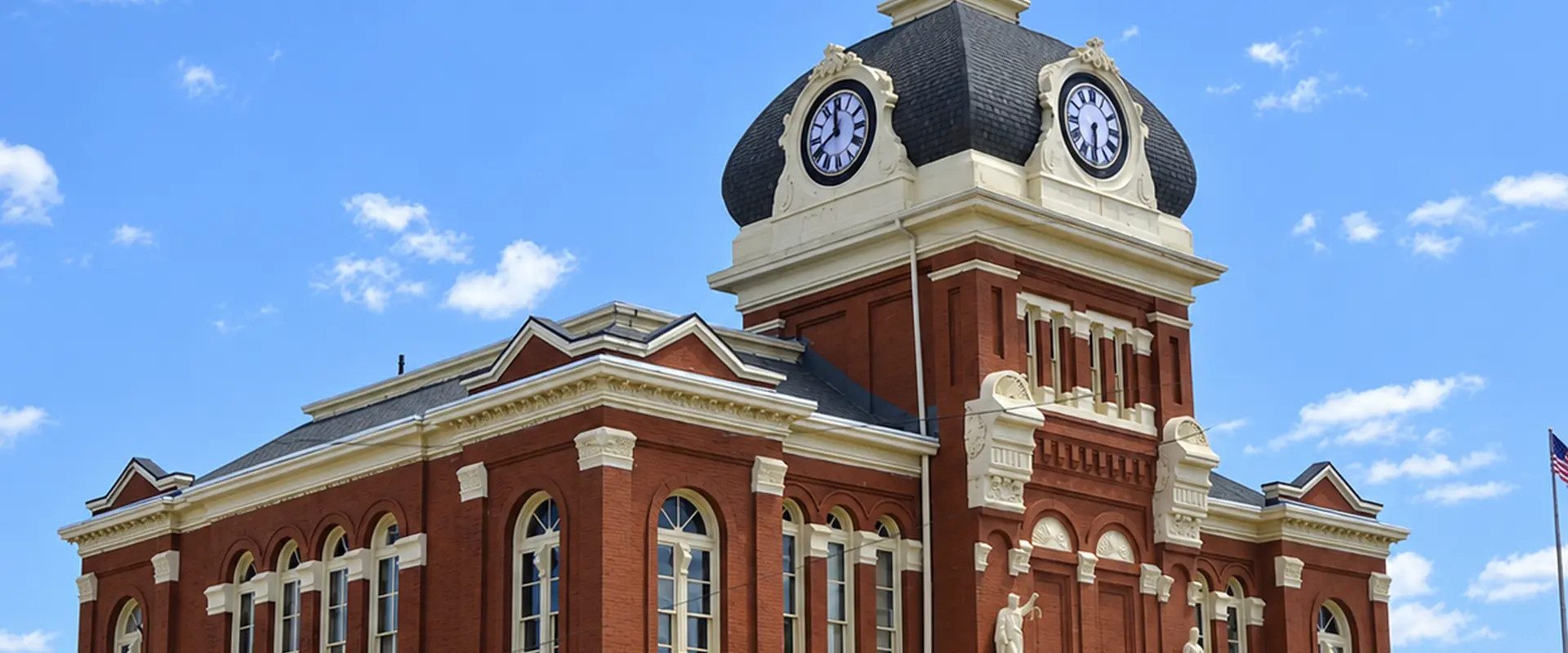
Scott County Circuit Court has jurisdiction over all matters in the county at the trial level, and is located at the Scott County Courthouse in Winchester.
Jurisdiction includes:
- Felony and misdemeanor criminal cases
- Traffic violations and DUI cases
- Civil lawsuits, such as contract, property, and personal injury disputes
- Small claims for money disputes up to $10,000
- Evictions and landlord-tenant disputes
- Divorce, child custody, child support, and orders of protection
- Probate of wills, estates, and guardianships
- Juvenile and adoption matters
Since one court system handles all of this, the Circuit Clerk is the one office where files of any type of Scott County case are housed.
How to Access Scott County Court Records

Generally, court records in Scott County are public unless they have been designated as confidential, for example, those about juvenile cases, adoptions, and sealed records. Records are useful for persons needing to check the status of a case, plan to attend court, or investigate a background.
 Online Access
re:SearchIL is the statewide portal to the Illinois court system's electronic filing system and provides access to case information online. If one is looking for specific case details, such as party names, charges/claims, and dates, a search on a party name or case number/date yields cases filed through eFileIL, subject to the Illinois Remote Access Policy. Generally, registration is required, which is free, with parties to a case and their attorneys getting the most document access. The Scott County Circuit Clerk page serves as the local point of access for cases. If a researcher has key information, such as all party names and/or a case number, it will expedite the search.
 Alternative Online Options
Official tools require a searcher to already know which courts in which county have case filings; piecing this together could be time-consuming. CourtCaseFinder pulls public records on the internet into one handy search engine; they also contain public records on the internet in court filings, arrests, and divorces. This style of search works ideally when a party is familiar with someone's name and has trouble recalling the county or court responsible for the documents, and wants to be guided toward the best source to get an official copy.
 In-Person Requests
In order to obtain a certified copy of any records not in digital format, to confirm it's an accessible document, and/or to make a certified copy to send to governmental agencies, the quickest way is to appear in the Circuit Clerk's Office at the Scott County Courthouse. It is best to provide staff with the case number, parties involved in the litigation, or the general date filed.
 Archived Records
Any pre-digital-copy document from a court system would be a physical copy housed by either the Circuit Clerk or, in a non-court-related circumstance, by the County Clerk. Additionally, Scott County's record-keeping now has much of its information held by the Illinois Regional Archives Depository system, which keeps a county's records collection at the University of Illinois Springfield. Ultimately, whether seeking family lineage information or having a perplexing property question from fifty years ago, the definitive answer lies somewhere within the combination of an online query and an in-person/archival query.
For Attorneys and Legal Professionals
Attorneys on cases filed in Scott County are required to electronically file civil documents as mandated by the Illinois Supreme Court. Electronic filings are transmitted to the Circuit Clerk via the statewide eFileIL system and one of its licensed electronic filing service providers; other document types, such as those relating to criminal or traffic cases, may involve other filing procedures. Attorneys can log into re:SearchIL, a statewide repository for court documents, to see a case's status or their own documents that have already been filed. All submissions must be consistent with Illinois Supreme Court rules and any local rule specific to the 7th Judicial Circuit Court. Cases in the 7th Judicial Circuit Court cover all six counties within the circuit; as such, an attorney who represents a client in more than one county should research the local practice standards and requirements unique to each specific county.
Out-of-state attorneys who will be appearing on a case in Scott County should ascertain if venue is correct for their lawsuit, familiarize themselves with standardized statewide forms authorized by the Illinois Supreme Court, and note that (similar to the other counties within the 7th Judicial Circuit) Scott County uses its local procedures for court and practice as well as the circuit's own set of forms. The Scott County Circuit Clerk will be able to provide details for certification of court records, how to request copies, and the procedure to have records in storage removed from storage, but neither the court clerk nor court staff will be able to offer legal guidance on the proper method for pursuing legal remedies.
How to File a Case in Scott County

Make sure to file the lawsuit properly in Scott County to avoid rejection, delay, or dismissal. Filing procedures are handled according to the Illinois statewide rules, although procedures for filing may vary slightly locally at the Circuit Clerk's office. Knowing how to do this is critical as one navigates filing and prosecuting cases in the 7th Judicial Circuit.
Step 1: Choose the Correct Court
In Scott County, cases are handled by the Circuit Court of the 7th Judicial Circuit, the county's court of general jurisdiction, which covers felonies, significant civil suits, family cases like divorce or child custody, probating an estate, and almost all traffic offenses. Since there's only one court covering everything, all that is needed is to get the filing to the appropriate classification (civil, criminal, family, or probate), so that the filing can be completed without dismissal.
 Step 2: Complete Required Forms
Filers can download approved forms for each case type on the Illinois Courts website or at Illinois Legal Aid Online. Download the correct standardized forms that match the case one is bringing. Filers must complete them in full and accurately, include all necessary attachments, and sign all applicable spaces. Failure to include all of the information, or submitting an incorrectly filed form, continues to be one of the primary reasons for dismissal of cases.
 Step 3: File the Case
Cases are filed electronically using the statewide eFileIL system. Attorneys must use the eFileIL system, but all self-represented litigants have the option to eFile from any computer that is connected to the internet. If a self-represented litigant is unable to eFile, they can apply for a good-cause exemption and submit a paper copy in person at the Circuit Clerk's Office. The Circuit Clerk reviews all original complaints and petitions, and all later filed documents during regular business hours; remember to keep the case number and receipt provided with the stamped copies.
 Step 4: Pay Filing Fees
The required amount of filing fee is dependent on the type of case that is being filed and set forth by Illinois law and by rules set forth by the local court. While many civil and probate cases start at base fees, some will have a smaller fee. Contact the Circuit Clerk's office for the current fee amounts. If a party is not able to afford the court fees, a waiver application form or affidavit of indigency will need to be filled out and sent along with all evidence of the party's financial condition to the judge for their consideration.
 Step 5: Serve the Other Party
Most filings are required to have Service of Process completed first, which officially notifies the other party about the lawsuit. This is usually done through the Scott County Sheriff's Office, a registered private process server, or, in some cases, via certified mail in accordance with Illinois's guidelines. After service has been completed, a Proof of Service must be filed with the court.
 Step 6: Monitor the Case
Once a case has been filed, it is monitored through re:SearchIL or by contacting the Circuit Clerk's office for information on the status of hearings or orders in the case. The ongoing review of filed materials in a case, as well as upcoming court dates and orders, ensures that court deadlines are met for the case to proceed promptly toward resolution.
Scott County Courthouse Directory
Scott County Courthouse (Circuit Court)
Home to the primary judicial center for all of Scott County court actions. The Circuit Court and the Office of the Circuit Clerk, as well as supporting administrative offices with criminal, civil, family, probate, and traffic duties and record and filings, certified documents, and requests for the same, are housed within the courthouse.
Winchester
Address: 35 E Market St, Winchester, IL 62694
Phone: (217) 742-5217
Website: 7th Judicial Circuit Court
Legal Help and Self-Help Resources
Local, state, and non-profit organizations offer assistance for those considered vulnerable individuals, such as low- to mid-income residents, the elderly, veterans, and victims of domestic abuse. These organizations will provide them with instructions and procedures for navigating the courts, as well as the ability to answer questions or provide support when required.
 Free Legal Assistance
Illinois Legal Aid Online and the Scott County Legal Self-Help Center in Winchester at the Public Library provide free legal information on the law for one's rights and responsibilities, help in preparing documents for common legal matters, and referrals to other programs that can offer legal advice and assistance. Land of Lincoln Legal Aid provides free legal advice and assistance to eligible low-income residents and seniors across 65 central and southern Illinois counties, including Scott County. Apply for services online or by phone through their intake and referral center. Land of Lincoln Legal Aid and Illinois Legal Aid Online programs also help domestic violence victims navigate protection orders, custody matters, housing issues, and other related legal needs and provide legal services for seniors on guardianship, benefits, and consumer problems.
 Local Legal Support
Local help in Scott County starts at the Scott County Legal Self-Help Center at the Winchester Public Library, which offers procedural information, court forms, free computer access, and referrals, though not legal advice. The Clerk of the Circuit Court at the courthouse can also provide forms and explain procedures for self-represented litigants, but cannot advise on how to handle a case.
Income-eligible residents who need help with housing, family, or consumer problems can apply through Illinois Legal Aid Online and Land of Lincoln Legal Aid, which also runs a pro bono referral program connecting qualifying clients with volunteer attorneys. Simple or uncontested matters can often be handled without a lawyer, while more complex cases, such as contested divorces, custody disputes, or probate, usually benefit from professional representation. For a case that needs an attorney, the Illinois State Bar Association runs a lawyer referral service that matches residents with counsel by practice area.
FAQs
How can veterans obtain free legal aid in Scott County?
Scott County veterans, service members, and their families qualify for free civil legal services via the Illinois Armed Forces Legal Aid Network (IL-AFLAN), which covers cases related to VA benefits, family law, housing, and discharge upgrades. Call the statewide hotline when business hours permit. VA-related cases are handled whether service members are discharged honorably or otherwise, aside from those dishonorably discharged.
Are third-party court records reliable?
Third-party services such as CourtCaseFinder are a convenience because they compile data from various courts in one place. A researcher can, for example, use them if they're not sure exactly which court a case may be recorded in. Official court records are kept by the Clerk of Court. One strategy would be to find a case through a third-party website, and then verify the information by calling or visiting the clerk's office to get certified records if necessary.
Where can victims of domestic violence find legal assistance in Scott County?
Scott County residents who are victims of domestic violence can receive assistance in seeking orders of protection, navigating divorces, and settling custody issues from Land of Lincoln Legal Aid and Illinois Legal Aid Online, which also assists with housing-related matters. Residents can apply for assistance through Illinois Legal Aid Online or call the Land of Lincoln Legal Aid referral center. These confidential services are available to low-income individuals and seek to put one's safety first.
How do I obtain a certified copy of a court record in Scott County?
Certified copies of court records are issued through the Scott County Circuit Clerk's office in the Winchester courthouse. In-person and mail requests require the case name and number, plus payment of copy fees. Archived case dockets may be available online for viewing on re:SearchIL, but only the circuit clerk can certify a copy. Including the specific case number can make the retrieval of the file more efficient.
What is the process for filing a probate case in Scott County?
Probate actions in Scott County are initiated at the Circuit Clerk's office of the Scott County Circuit Court. The filer will need to get a proper form from the Illinois Courts website, fill it out, and turn it into the Circuit Clerk with a filing fee or an accepted waiver of filing fee. This filing form will then be processed by the Clerk, and a hearing date can be set. Land of Lincoln Legal Aid assists in qualifying low-income filers with this process.
Are there pro bono attorneys available for Scott County residents?
Land of Lincoln Legal Aid and referrals from Illinois Legal Aid Online can help Scott County residents receive legal aid that is free or reduced in cost. Depending on available volunteer programs, low-income individuals and the elderly might receive free representation in civil court cases. Applications can be completed online or by calling a referral number. The self-help center at the courthouse can help individuals locate the appropriate volunteer programs.
Other Counties in Illinois
- Adams
- Alexander
- Bond
- Boone
- Brown
- Bureau
- Calhoun
- Carroll
- Cass
- Champaign
- Christian
- Clark
- Clay
- Clinton
- Coles
- Cook
- Crawford
- Cumberland
- Dekalb
- Dewitt
- Douglas
- Dupage
- Edgar
- Edwards
- Effingham
- Fayette
- Ford
- Franklin
- Fulton
- Gallatin
- Greene
- Grundy
- Hamilton
- Hancock
- Hardin
- Henderson
- Henry
- Iroquois
- Jackson
- Jasper
- Jefferson
- Jersey
- Jo Daviess
- Johnson
- Kane
- Kankakee
- Kendall
- Knox
- La Salle
- Lake
- Lawrence
- Lee
- Livingston
- Logan
- Macon
- Macoupin
- Madison
- Marion
- Marshall
- Mason
- Massac
- Mcdonough
- Mchenry
- Mclean
- Menard
- Mercer
- Monroe
- Montgomery
- Morgan
- Moultrie
- Ogle
- Peoria
- Perry
- Piatt
- Pike
- Pope
- Pulaski
- Putnam
- Randolph
- Richland
- Rock Island
- Saint Clair
- Saline
- Sangamon
- Schuyler
- Shelby
- Stark
- Stephenson
- Tazewell
- Union
- Vermilion
- Wabash
- Warren
- Washington
- Wayne
- White
- Whiteside
- Will
- Williamson
- Winnebago
- Woodford
Table of Contents
