Table of Contents
Sangamon County Courts, IL *

Geographically, Sangamon County sits at the center of Illinois. The County seat is in Springfield, which is also the capital city of Illinois. Sangamon County has a population of 196,000. It is generally made up of urban areas and smaller rural communities. Like any other Illinois county, Sangamon has a trial court system designed to handle all legal issues affecting the people, ranging from small claim disputes to serious felonies. The county has a unified court system, meaning it has one trial-level court that handles all legal matters for the people.
The county has one of the busiest court systems in the state, and this makes the process of seeking justice challenging. Sangamon County handles various cases, including criminal, civil, family, probate, and juvenile cases. Having the basic knowledge of the courts and their roles saves people time, money, and a lot of stress during the court process.
Overview of the Sangamon County Court System
The people of Sangamon County get their services through the Illinois Seventh Judicial Circuit, which also includes Christian, Greene, Jersey, Macoupin, Montgomery, Morgan, and Scott counties. There is only one court at the trial level, called the Circuit Court, that handles all types of cases. To ensure a seamless process, the court branches into various divisions based on the type of case to be handled. Also, unlike many other states, it has a municipal court that deals with city ordinances within the city.
Every day, cases are filed, heard, and decided at the Circuit Court level, which is managed by the chief judge. The Clerk's office plays a major role in the county's court proceedings by managing court records and the filing process. The courthouse is located in Springfield, and its history dates back to the 1820s. Whenever people feel dissatisfied with the outcome in the Circuit Court, they may appeal to the Appellate Courts and, ultimately, to the Supreme Court of Illinois, which is part of the Illinois court system.
Types of Courts in Sangamon County, Illinois

When one has a legal matter, the first step is to identify the court that handles such cases. In Sangamon County, there is only one trial court at the county level, known as the Circuit Court, which has different divisions. The Circuit Court is located at the Sangamon County Courthouse. To ensure a smooth process, the Circuit Court is divided into several divisions, and cases are assigned according to the type of case filed. The section below provides a detailed description of the Circuit Court's divisions and their functions.
Primary Location: Sangamon County Courthouse
 Criminal Division
The criminal division handles cases involving felonies and misdemeanors, according to the Sangamon County court system's criminal division resources. The division ensures that both offenses are dealt with fairly. Some of the cases they oversee include:
- Felony cases
- Misdemeanor
- DUI cases
- Bond hearings
- Arrest warrants
- Jury trials
- Sentencing hearing rings
- Traffic-related offenses
The Felony Division handles cases that can result in more than one year of imprisonment. Misdemeanor matters such as petty theft, disorderly conduct, and DUI cases are handled separately and carry shorter sentences. Whenever the accused cannot afford a personal attorney, one is provided by the Sangamon County Public Defender's Office.
 Civil Division
The Civil Division handles non-criminal matters involving organizations, businesses, and even landlords. Some of the cases in this division include:
- Evictions
- Contract disputes
- Personal injury claims
- Small claims matters
Sangamon County has made it easy to access the court filing forms by creating a single form through the Sangamon County Circuit Clerk's Family and Civil Forms. The county allows people to file cases as self-represented litigants. As much as they are not experts, both parties are expected to follow the Illinois civil procedures and rules.
 Family and Domestic Relations Division
The Family and Domestic Relations Division handles legal matters in Sangamon County that involve relationships, families, and domestic issues. The division focuses on cases such as:
- Divorce and legal separation
- Child custody
- Child and spousal support
- Adoption
- Paternity cases
- Domestic violence
The family and domestic relations division is one of the most important courts in Sangamon County, as it ensures the well-being of families and children. Couples seeking divorce do not need to prove that either of them was at fault in the marriage. This is because Illinois became a no-fault divorce state in 2016. All forms are accessible through the Divorce, Child Support, and Maintenance page.
 Probate Division
The Probate Division handles cases pertaining to wills, estates, and how to distribute the property after the death of a loved one. The Probate Division deals with cases such as:
- Validation of wills
- Appointment of executors
- Distribution of assets
The judge ensures the assets are fairly distributed and all legal processes are supervised. Due to the complexity of the probate case, the issues may take a long time to resolve to avoid the possibility of errors. They take months or even years, depending on the complexity of the matter and the size of the estate.
 Small Claims Division
The Small Claims Division currently handles money-related cases up to $10,000. The small claims division handles cases such as:
- Unpaid debts
- Security deposit disputes
- Landlords and tenants
- Minor contract disagreements
It is usually meant for people with non-complex issues that do not require an attorney. The case processes are simplified and informal to ensure that people can navigate them easily without legal help.
 Juvenile Division
The Juvenile Division focuses on cases dealing with children under the age of 18. It gives more attention to correction and guidance than to punishing minors. Juvenile cases in this county are usually confidential and cannot be accessed online. It handles cases involving:
- Truancy
- Drug abuse
- Neglect
- Dependency
The court works with social services, schools, and the Illinois Department of Children and Family Services. The program offers support and supervision to minors when necessary.
How to Access Sangamon County Court Records

Most records in Sangamon County are considered to be public records. However, there are some sealed, confidential cases, such as juvenile or sensitive family cases. The Circuit Clerk's Office is responsible for storing, updating, and providing access to records. Access can either be online or in person, depending on the restrictions.
 Online Access
The Sangamon County Circuit Clerk embraces and supports the use of online platforms like the re:SearchIL to provide the public with access to court records. Case index information, hearing dates, and basic case status can be found by searching using the case number, parties' names, or lawyers' names. Most of the information is free, but certified copies from the clerk's office usually incur a fee. Also, at the county level, the clerk's office provides them through the Circuit Clerk Court Records.
 Alternative Online Option
Also, the people of Sangamon County can use CourtCaseFinder to conduct a broader search. People who are unsure which court a case was filed in can get records in a single search. This is made possible because it gathers information from various court sites and puts it in one place. It saves the time the citizens would have spent searching many sites before finding the case they are trying to locate.
 In-Person Requests
In-person record access is a good option for those whose records are not online or for certified documents. For instance, restricted case information, such as juvenile cases, cannot be found online for privacy reasons; the only way to obtain it is to personally visit the Circuit Clerk's Office to obtain identification before accessing it. The certified copy of documents costs a fee. The fees keep changing, and one needs to check the current fee schedule. Bringing the case number to the clerk's office helps quicken the process.
 Archived Records
Some older courts in Sangamon County that predate the digital system may not be accessed at the normal online portals. The information can be found in the Illinois State Archives, which maintains historical records dating back to the 1980s. To retrieve such information from the Sangamon County circuit clerk's records, there is a fee, and the process may take time. If one is unsure, the Circuit Clerk's Office can help point them in the right direction.
For Attorneys and Legal Professionals
Lawyers and legal professionals in Sangamon County can benefit from access to the re:SearchIL portal. The site is very helpful to judges and lawyers who may need information on multi-county dockets, document retrieval, and personalized docket management. The management service enables them to stay on top of their game by preparing for cases in advance. Also, Sangamon County has a mandatory rule requiring filing via eFileIL for civil cases when done with a lawyer.
Before filing a case, attorneys can take the time to review the Seventh Judicial Circuit's local rules. The rules are important because they govern matters such as motion practice, scheduling orders, and courtroom decorum. While reviewing, they can pay closer attention to specifics, such as the filing deadline and the judge's preference for oral arguments, to ensure a swift court process.
How to File a Case in Sangamon County

While Illinois allows people to file their cases as self-represented litigants, the process can be frustrating, especially if one lacks knowledge of how to proceed. The process can be much easier if an individual has prior knowledge of the steps to follow when filing. Below are some general steps for filers to follow.
 Step 1: Choose the Correct Court
The County of Sangamon has one trial court, the Circuit Court, which has different divisions. It is part of the Seventh Judicial Circuit and covers all legal matters. Each division handles specific types of cases, so one must understand the case type to identify the division. Depending on the case type, people can choose the division that will handle their case. Choosing the correct court or division helps to ensure the case is processed. If a resident is unsure about the jurisdiction of their case, they can ask the Sangamon County Circuit Clerk for assistance.
 Step 2: Complete Required Forms
Once one has the right court division to address their issue, they are expected to choose the appropriate forms to present their case to the court. Different case types have standardized forms available online at the Sangamon County Self-Help Center or in person at the Clerk's Office. Also, the state ensures that people can access the forms through the Illinois Court Website. Correct filing is important because mistakes or missing information can delay the case. Residents can always ask court staff for assistance with completing the required forms correctly.
 Step 3: File the Case
The next step after completing the paperwork is to file it with the Circuit Clerk's Office. The process can be completed either online through the eFileIL portal or, as a rare exception, in person at the Circuit Clerk's Office. Those who are filing in person can bring more than one copy to ensure the clerk stamps the document and keeps one for themselves. They must also file an exemption from electronic filing. The case number is issued at this stage and should be kept safe, as it will be used to track the case going forward. It is important to file cases in a timely manner, as legal matters are subject to strict deadlines set by Illinois law.
 Step 4: Pay Filing Fees
When filing a case, the court will require a fee that varies by case type and the dollar amount in question. Small-claims civil cases are usually lower in value than major civil cases. Before filing, one should take time to review the County Clerk's Fee Schedule. Those unable to afford the fee may file an Application to Sue or Defend as an Indigent Person. Those with low income have a higher chance of qualifying.
 Step 5: Serve the Other Party
In Sangamon, a case filing is not considered complete if the other party is unaware of the lawsuit. Service of process should be conducted legally to avoid rejection. In Sangamon, the service documents should be prepared with the Circuit Clerk, and the Sheriff's Office delivers them to the other party. Also, the private process server or certified mail can be another option. Once done, a proof of service must be filed back with the court for the case to proceed.
 Step 6: Monitor the Case
Finally, having taken every step correctly, the court schedules the appearance dates, which parties must strictly adhere to. Noncompliance may lead to a default judgment, dismissal, or an arrest warrant. Use tools such as re:SearchIL to track the case. It allows citizens to search for case information, such as the party's name, docket number, or date range, for free and access index information about the case. Residents can also call the Circuit Clerk's Office to ask for case updates.
Sangamon County Courthouse Directory
Sangamon County Courthouse
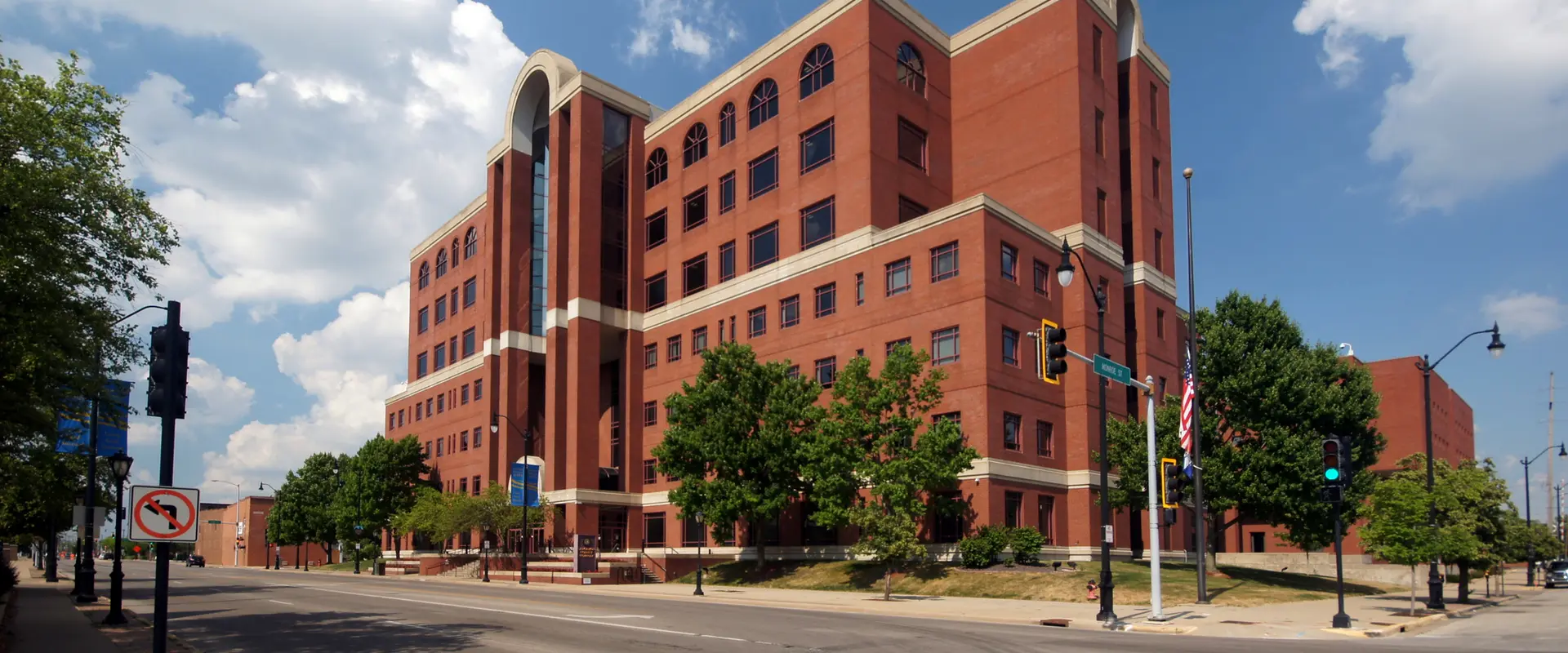
The Circuit Court House is the main courthouse in Sangamon County. It is part of the seventh judicial court system of Illinois. It handles legal cases such as criminal, civil, family, and traffic cases.
Springfield
Address: 200 South Ninth Street, Springfield, IL 62701
Phone: (217) 753-6674
Website: Sangamon County Courthouse
Legal Help and Self-Help Resources
A significant number of people seeking justice find the cost of hiring an attorney expensive. While some people may not need representation, it is necessary to ensure that those who require assistance can access it through various networks. Below are a few.
 Free Legal Assistance
The people with low income can take advantage of the available resources, such as:
- Illinois Legal Aid Online is a statewide resource with plain-language guides and forms to help self-represented litigants navigate the legal process more quickly.
- Land of Lincoln Legal Aid helps low-income individuals with civil matters, including family law and housing, in central and southern Illinois.
- The Illinois Court Help Program is designed to help people navigate the court system by providing county-specific information, including court locations, hours, and links to resources.
 Local Legal Support
There are also local support services closer to residents in Sangamon County. They include:
- The Illinois State Bar Association can connect individuals with local attorneys at a reduced initial fee.
- The Sangamon County State's Attorney's Office can connect people facing criminal charges with public defenders to represent them.
- The Illinois Armed Forces Legal Aid Network offers veterans and their families help with civil cases, such as housing or disability benefits assistance.
FAQs
How does someone search for a criminal case in Sangamon County?
The Sangamon County criminal cases are searched online through the re:SearchIL. Search using details such as case number, filing date, and defendant's name. There are court details and records that cannot be found online, such as juvenile and personal family cases.
Where can the eviction records be found?
In the State of Illinois, Sangamon County eviction records are considered civil matters. Some eviction records can be found in the Circuit Clerk Court Records by searching using the court dates, case number, tenant name, and landlord number. However, not all eviction records are public; they are restricted and only available at the clerk's office.
What is the filing fee for a small claims case in Sangamon County?
The small-claims filing fee in Sangamon County varied depending on the amount claimed. The more the amount, the higher the fee. For instance, for claims under $2,500, the fee ranges from $50 to $75, while those between $2,500 and $10,000 carry higher fees of $100 to $250 range. Before filing, one should take time to review the County Clerk's Fee Schedule.
How do I get an Order of Protection in Sangamon County?
Because of the urgency of matters requiring an Order of Protection, it is considered an emergency. This means one does not need a court date to get the judge's attention. If one has evidence of abuse, they can get it the same day, even without the other party being involved. The order is temporary, and a hearing is scheduled immediately afterward for a long-term, permanent one.
When is it helpful to use a third-party records finder?
Third parties are helpful in different situations, such as when people do not know where to start. Tools like CourtCaseFinder are helpful when databases from different counties are needed, as they help to save time. In situations where one needs to conduct a broader search beyond the state, it is the best option because it has compiled information from various court sites within Illinois and beyond.
Other Counties in Illinois
- Adams
- Alexander
- Bond
- Boone
- Brown
- Bureau
- Calhoun
- Carroll
- Cass
- Champaign
- Christian
- Clark
- Clay
- Clinton
- Coles
- Cook
- Crawford
- Cumberland
- Dekalb
- Dewitt
- Douglas
- Dupage
- Edgar
- Edwards
- Effingham
- Fayette
- Ford
- Franklin
- Fulton
- Gallatin
- Greene
- Grundy
- Hamilton
- Hancock
- Hardin
- Henderson
- Henry
- Iroquois
- Jackson
- Jasper
- Jefferson
- Jersey
- Jo Daviess
- Johnson
- Kane
- Kankakee
- Kendall
- Knox
- La Salle
- Lake
- Lawrence
- Lee
- Livingston
- Logan
- Macon
- Macoupin
- Madison
- Marion
- Marshall
- Mason
- Massac
- Mcdonough
- Mchenry
- Mclean
- Menard
- Mercer
- Monroe
- Montgomery
- Morgan
- Moultrie
- Ogle
- Peoria
- Perry
- Piatt
- Pike
- Pope
- Pulaski
- Putnam
- Randolph
- Richland
- Rock Island
- Saint Clair
- Saline
- Schuyler
- Scott
- Shelby
- Stark
- Stephenson
- Tazewell
- Union
- Vermilion
- Wabash
- Warren
- Washington
- Wayne
- White
- Whiteside
- Will
- Williamson
- Winnebago
- Woodford
Table of Contents
