Table of Contents
Pulaski County Courts, IL *

Pulaski County is located at the southern tip of Illinois. It is a small rural county located between the Ohio River and the Cache River bottomlands. The county seat, Mound City, is one of the smallest county seats in the state. The county courts fall under the First Judicial Circuit, the largest in the state, and handle criminal, civil, family, probate, traffic, and small claims cases. It is the records generated from these cases that are most often searched.
The records can be searched for various daily purposes: a landlord can check a tenant's record for evictions; a person can conduct a criminal background check; or a relative might trace a family line back through the estate files of a county founded in the 1800s. Illinois operates its judicial system differently from other states, so knowing this system and which governmental body holds the records greatly facilitates the search.
Overview of the Pulaski County Court System
The Illinois state court system has three levels. The Illinois Supreme Court is at the top. Below that are the Appellate Courts and then the Circuit Courts, where nearly all cases begin. At the county level is the Pulaski County Circuit Court. This County Circuit Court is the lowest level of the judicial system and is part of the First Judicial Circuit.
The Circuit Clerk provides office information for all records and receives all fees associated with court proceedings in Circuit Court, including criminal and civil matters, family, probate, traffic, small claims, and more. For a small county like Pulaski, where one office holds most records, this system works efficiently.
Types of Courts in Pulaski County, Illinois

The state of Illinois doesn't divide its trial courts into specialized courts such as probate, family, or municipal courts. There is only one trial court, the Circuit Court, and it is divided into divisions. All records from these courts are processed by the Circuit Clerk, so the courthouse in Mound City is the sole point of service for court matters within the county.
 Circuit Court
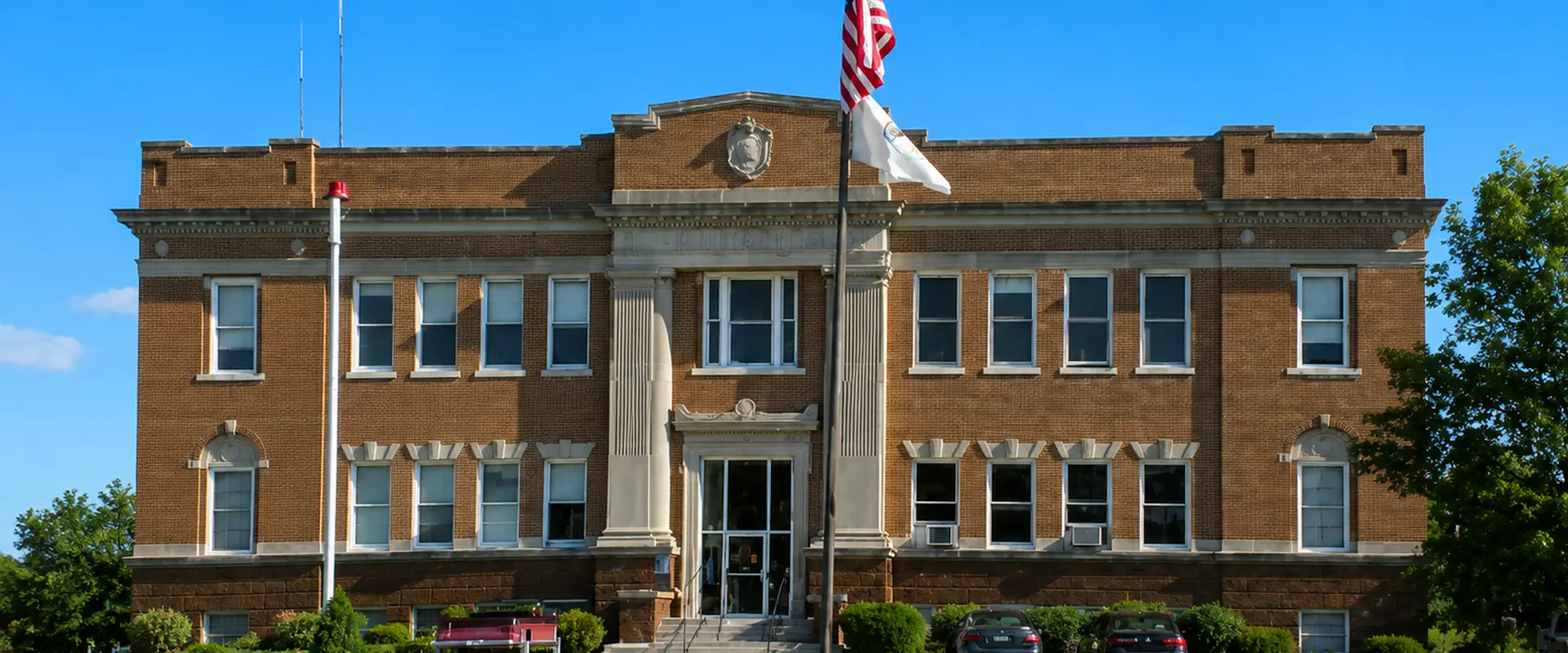
The Pulaski County Circuit Court is the only court in the county, and its jurisdiction is general, meaning that it hears all types of cases, from an infraction traffic violation to a disputed inheritance, from misdemeanors to felonies. It is located in the Pulaski County Courthouse in Mound City, an old building built in 1912 that was also damaged by the Great Flood of 1937.
Jurisdiction includes:
- Felony and misdemeanor criminal cases
- Traffic tickets and DUI cases
- Small claims for amounts up to $10,000
- Evictions and landlord-tenant disputes
- Divorce, custody, and support cases
- Larger civil lawsuits, foreclosures, and estate cases
- Guardianship of minors and disabled adults
The cases within the court are divided into Criminal, Civil, Family, and Probate Divisions. However, all of the files go through the Clerk of the Circuit Court. As part of the First Judicial Circuit, the county shares a chief judge with the neighboring counties. All administrative duties are also circuit-wide, with judges traveling to different counties to hear cases. Even so, in Pulaski County, the records are located in Mound City. Since it is a small rural county, not all court sessions are held every day, so make sure to call ahead before visiting or making an appointment.
How to Access Pulaski County Court Records

In Illinois, most court records are publicly accessible under the Illinois Clerk of Courts Act. There are only certain records that the Act exempts: juvenile records, adoption records, mental health records, and any records sealed by a judge. Any cases beyond these records depend on whether to search for them online or visit the courthouse in Mound City.
 Online Access
When residents want to access case information, they do not have to visit the courthouse in person in many cases. Illinois maintains re:SearchIL, the state's one-stop site for documents produced through the state's electronic filing system. Access to the site is governed by the Illinois Remote Access Policy, which requires users to register. The fullest level of access to the system is granted to attorneys and parties on a specific case. Together with the state's eServices hub, which bundles filing, searching, and case management services, a researcher has nearly all the relevant tools available online. If a resident does not have access to search cases online at home, the county provides terminals at the courthouse for case information.
 Alternative Online Options
The state systems are most effective for users who already know which county to search and which docket or file type is required. For someone with only a name and no knowledge of whether a case exists, or if so, in which county, an extensive name search through each of the nearby counties in the First Judicial Circuit is required. CourtCaseFinder, which searches multiple jurisdictions at once and identifies the county and court where a particular record is stored, can serve as an initial step before seeking the official copy from the Circuit Clerk.
 In-Person Requests
For certified copies and older files not available online, the Circuit Clerk's office is the source. Located in the Pulaski County Courthouse, the office staff will pull the correct files and provide certified copies for a fee determined by state law, after confirming that the documents can be released. Note that the Circuit Clerk's office has a split schedule with a midday break, so verify hours before visiting. The more information a user provides, including names, approximate date, and case number, the faster the clerk can help. Free assistance is available by contacting Illinois Court Help by phone or text.
 Archived Records
Pulaski County was organized in 1843. However, due to a fire in the courthouse on November 22, 1879, most of the county's early records were destroyed, and researchers should be aware of the gap. There are still some early files in the courthouse, though retrieving them may require additional waiting periods. Most of the remaining historical material is preserved through the Illinois Regional Archives Depository (IRAD) system located at Southern Illinois University at Carbondale. By combining the county courthouse records with those stored in the archives system, one can achieve the most comprehensive results when researching genealogies.
For Attorneys and Legal Professionals
Attorneys on a Pulaski County case search the cases that they filed on re:SearchIL. The Illinois Supreme Court mandates that any civil case be filed electronically through eFileIL and a designated filing service. Criminal, traffic, and related cases are filed differently. Therefore, consult the Circuit Clerk before filing the case to ensure the submission is not returned or rejected.
If an attorney cannot e-file, a paper filing is allowed once a Certificate for Exemption from E-Filing under Supreme Court Rule 9(c)(4) has been submitted. All filings must comply with the Illinois Supreme Court Rules and the local rules of the First Judicial Circuit. An attorney should check which days the court sits in Pulaski County before scheduling any appearances, since the courthouse is very large and the judges rotate among counties. It may take longer for an attorney to acquire certified or archived records in this small office.
How to File a Case in Pulaski County

Filing a case is not the same as searching for a record, even though both are handled by the Circuit Clerk. Filing in the wrong division or filing incomplete paperwork will cause additional expenses, delays, or a dismissal of the case. The steps outlined here are the general path of a civil case. Criminal cases begin differently, often involving law enforcement and the State's Attorney.
Step 1: Choose the Correct Court
Since there is only one court that hears everything, the first step is to choose the appropriate division of the court. The Civil Division hears small claims and monetary damage cases. Divorce and child custody go to the Family Division, while wills, estates, and trustee cases belong in the Probate Division. Normally, a case belongs in the county where the defendant lives or where the dispute arose. Getting this right in the first step avoids a subsequent dismissal and/or transfer. Residents who have questions can always ask the Circuit Court Clerk for assistance.
 Step 2: Complete Required Forms
Once the case division is decided, it's time for the proper papers. The State of Illinois provides standardized statewide forms for most case types. Filers can also download free guides and instructions from the Illinois Legal Aid Online website. Clearly fill out each form, sign where required, and attach all necessary supporting documents. Failure to include one piece is a very common reason for paperwork to be rejected. The Circuit Court Clerk's Office can guide residents in completing court paperwork.
 Step 3: File the Case
eFileIL is the website where most civil cases are filed. Citizens can file from home, from their office, or from a public computer. If a self-represented filer qualifies for an exemption, they can file on paper. Regardless of how the filing is made, the clerk reviews it, and the filer must keep the case number and a file-stamped copy. These are needed to track the case.
 Step 4: Pay Filing Fees
The fee amount varies by case type and may change, so it is best to contact the Circuit Clerk for the up-to-date amount prior to filing. The filer who is unable to pay the fee may submit an Application for Fee Waiver due to insufficient funds. The judge reviews the application, and it can be filed simultaneously with the case to avoid delay.
 Step 5: Serve the Other Party
After all the forms are filed with the court, the other party must be given official notice. This service of process may be effected by the county sheriff, a special process server appointed by the court, or, if permitted by the court's rules, by certified mail. The filer cannot serve the other party themselves. A proof of service form must be filed with the court. Failure to do so will result in delays and possibly dismissal.
 Step 6: Monitor the Case
Once service is complete, it is the filer's responsibility to stay up to date on the progress of the case. Court dates can be rescheduled, and deadlines can be moved. A missed civil hearing can result in the other party obtaining a default judgment against the filer. Regular review of the case docket through eFileIL, re:SearchIL, or the Circuit Clerk's office helps prevent missed hearings, deadlines, and other case developments.
Pulaski County Courthouse Directory
Pulaski County Courthouse
The Pulaski County Courthouse is the center of Pulaski County's court system. This building houses the Pulaski County Circuit Court and the office of the Clerk of the Circuit Court, who serves as the keeper of records for the criminal, civil, family, probate, traffic, and small claims courts. The clerk's office receives filings, receives court costs, and provides certified copies. Pay attention to the split daily office hours, including a midday break.
Mound City
Address: 500 Illinois Avenue, Mound City, IL 62963
Phone: (618) 748-9300
Website: Pulaski County Circuit Court
Legal Help and Self-Help Resources
A legal problem in Pulaski County does not have to be faced alone. The help available reaches well beyond those who cannot afford a lawyer.
 Free Legal Assistance
Land of Lincoln Legal Aid provides free civil legal services for eligible low-income people and seniors throughout central and southern Illinois, including Pulaski County. Practice areas include housing, family, consumer, and public benefits. Illinois residents also have access to a statewide program called Illinois Legal Aid Online, offering free legal information, guided forms, and self-help tools. Filing for an order of protection, which is fee-waived in Illinois, can be done through the court.
Veterans, survivors, and dependents can receive assistance with claims and paperwork through the Illinois Department of Veterans Affairs VSO locator, and seniors can consult Illinois Legal Aid Online's senior resources for all concerns involving guardianships, estates, and public benefits. Assistance for disabled persons with all types of legal issues in all 102 Illinois counties is provided free of charge by Equip for Equality Illinois's Protection and Advocacy.
 Local Legal Support
If one does not have an attorney, they can use Illinois Court Help. This is a free, statewide service that answers questions by phone and text about court procedures and provides standardized forms generated by the Illinois Supreme Court. In addition, the First Judicial Circuit offers a Self-Help and Lawyer in the Library program at various libraries in the area. While office staff will explain a particular procedure or help in locating the right form, they cannot provide legal advice. If a legal situation requires an attorney, residents can locate attorneys by practice area using a referral service offered by the Illinois State Bar Association at free or reduced rates.
FAQs
How can someone search Pulaski County court records online?
Pulaski County uploads its dockets to re:SearchIL, a case-search tool used by most Illinois counties. One can search by name or case number to find cases of all kinds, including civil, criminal, traffic, and more. Traffic tickets that do not require a court appearance can be paid through this service.
Does such a small county really have its own courthouse and records?
Right. Despite being one of the least-populated counties in Illinois, Pulaski County maintains its own Circuit Court and Circuit Clerk in Mound City and retains local records dating back to the 1840s. Pulaski County, however, does share with its neighbors a circuit judge and clerk from the First Judicial Circuit, as the judge serves the entire circuit of counties and the judicial and administrative records remain within each county.
Does Pulaski County have separate probate, family, or traffic courts?
No. The county, like the rest of Illinois, has only one Circuit Court, which is divided into criminal, civil, family, and probate divisions. There are no separate probate, family, or municipal courts. Since one office, the Clerk of the Circuit Court, maintains the records for all the divisions, a researcher must deal with only one office, which is very handy in a small county.
What is the limit for a small claims case?
According to Supreme Court Rule 281, in Illinois, the small claims court covers money cases up to $10,000, exclusive of court costs and interest. The process is informal and intended to be simple enough to be litigated without an attorney. Cases seeking over $10,000 or involving a non-money matter are regular civil cases, and the Circuit Clerk should be consulted before any paperwork is drafted.
What could explain the absence of a case from Pulaski County's records when a researcher believes one exists?
The old courthouse fire of 1879 destroyed most of Pulaski County's early records, so some earlier cases may simply not exist in a form that can be accessed. A case filed in another neighboring county within the First Judicial Circuit (Alexander, Massac, Johnson, or Union) would not be found in Pulaski County's records, as each county maintains its own records. Sealed cases and any case involving juvenile justice are also restricted from public view by law. When the trail gets cold locally, a system such as CourtCaseFinder allows searches across several counties or jurisdictions at once and will often reveal matters that a county-specific search would entirely overlook.
Other Counties in Illinois
- Adams
- Alexander
- Bond
- Boone
- Brown
- Bureau
- Calhoun
- Carroll
- Cass
- Champaign
- Christian
- Clark
- Clay
- Clinton
- Coles
- Cook
- Crawford
- Cumberland
- Dekalb
- Dewitt
- Douglas
- Dupage
- Edgar
- Edwards
- Effingham
- Fayette
- Ford
- Franklin
- Fulton
- Gallatin
- Greene
- Grundy
- Hamilton
- Hancock
- Hardin
- Henderson
- Henry
- Iroquois
- Jackson
- Jasper
- Jefferson
- Jersey
- Jo Daviess
- Johnson
- Kane
- Kankakee
- Kendall
- Knox
- La Salle
- Lake
- Lawrence
- Lee
- Livingston
- Logan
- Macon
- Macoupin
- Madison
- Marion
- Marshall
- Mason
- Massac
- Mcdonough
- Mchenry
- Mclean
- Menard
- Mercer
- Monroe
- Montgomery
- Morgan
- Moultrie
- Ogle
- Peoria
- Perry
- Piatt
- Pike
- Pope
- Putnam
- Randolph
- Richland
- Rock Island
- Saint Clair
- Saline
- Sangamon
- Schuyler
- Scott
- Shelby
- Stark
- Stephenson
- Tazewell
- Union
- Vermilion
- Wabash
- Warren
- Washington
- Wayne
- White
- Whiteside
- Will
- Williamson
- Winnebago
- Woodford
Table of Contents
