Table of Contents
Mchenry County Courts, IL *

McHenry County is located in the northeastern region of Illinois, just along the Wisconsin border. McHenry is one of the five outer collar counties of the Chicago metropolitan area, which means they form a ring around the city of Chicago. The county is the 6th most populous county in Illinois, with a population of around 310,000. The county seat of McHenry is Woodstock. Although McHenry County has experienced suburban growth over the years, the county still maintains its rich agricultural and rural charm.
The McHenry County Circuit Court system is responsible for handling legal matters of the people of McHenry County and its surrounding areas as part of Illinois's unified justice system. The court handles major and minor criminal and civil cases, including family law matters and cases involving the affairs of the deceased, in McHenry County daily. Attorneys and locals also depend on this court system to file cases, access court records, and protect their constitutional rights. For this reason, they should understand how the McHenry County Court system functions to navigate it seamlessly.
Overview of the McHenry County Court System
The McHenry County Court System is the only court system within the 22nd Judicial Circuit of Illinois. This is unlike other counties in the state that share various Judicial Circuits. The McHenry County Circuit Court is the single trial court of unlimited general jurisdiction in McHenry County. The Circuit Court is responsible for handling all criminal, family, probate, and civil matters because there are no local or municipal courts.
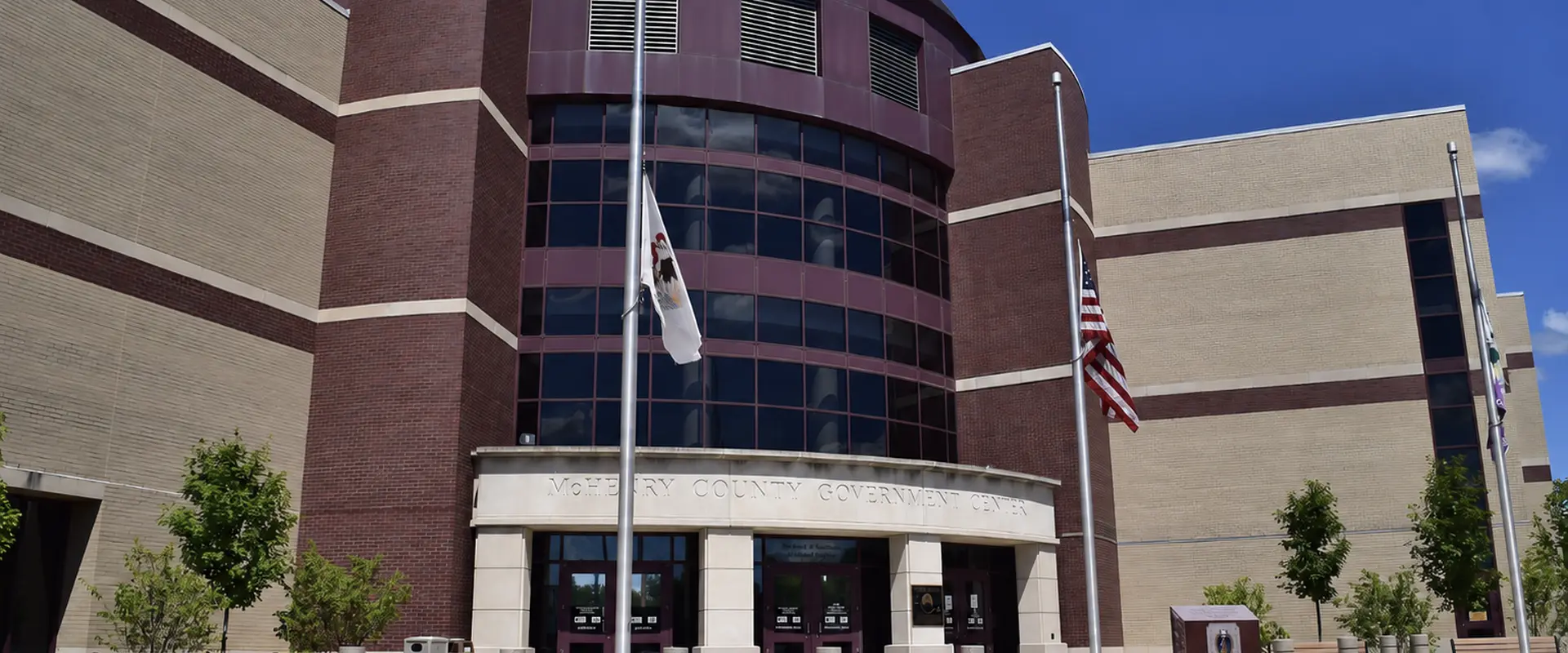
The McHenry County Circuit Court handles a heavy load of different cases because the county is pretty big. Helping to handle the court matters are 8 Circuit Judges, 11 Associate Judges, and Court Officers. The people elect the Circuit Judges, who, in turn, appoint the Associate Judges. The Court Officers include a Trial Court Administrator and the McHenry County Circuit Court Clerk, who is the custodian of the Circuit Court records and collector of fees. The central location for McHenry judicial matters is at the Michael J. Sullivan Judicial Center in Woodstock. There are also special problem-solving court divisions that work alongside the Circuit Court to tackle specific matters, including Adult Drug Court, Mental Health Court, DUI Court, and Domestic Violence Court. McHenry also hosts virtual courtrooms via Zoom for civil, criminal, and emergency status hearings.
Types of Courts in McHenry County, Illinois

The McHenry County court system is part of the overall unified court system of the 22nd Judicial Circuit of Illinois. This means there is a single trial court handling all legal matters in McHenry County. There are no county courts, town courts, or local municipal courts.
The McHenry County Circuit Court is the only trial-tier court in McHenry County. The Circuit Court has original unlimited jurisdiction to hear all legal matters, including criminal, civil, family, and probate matters. To help the Circuit Court hear different cases, there are specialized divisions responsible for each matter, although these divisions are not standalone courts. Here is how these specialized divisions handle specific matters to support the larger 22nd Judicial Circuit of Illinois.
Primary location: Michael J. Sullivan Judicial Center
 Criminal Division
Any violation of the statutes of the state of Illinois involving McHenry County is the responsibility of the Criminal Division. Jurisdiction is split into:
- Felony Courts (grand theft, aggravated assault, burglary, and homicide)
- Misdemeanor Courts (simple battery and criminal damage to property)
- Traffic & Ordinance Courts (speeding tickets, driving with a suspended license, and DUI)
 Civil Division
When it comes to financial or contractual disagreements involving private individuals, businesses, or government entities, the Civil Division takes the lead. Jurisdiction of this division is split into:
- Law Division (personal injury, medical malpractice, or breach-of-contract lawsuits)
- Chancery Court (commercial real estate title disputes, foreclosures, or trust disputes)
- Eviction Court (landlord and tenant disagreements)
 Family & Domestic Relations Division
The Family & Domestic Relations Division is solely responsible for handling family and household matters in McHenry County. Jurisdiction includes:
- Divorce and dissolution (marriage termination, asset division, and spousal maintenance)
- Family Court (child costody, paternity disputes, and child supportpaternity disputes, and child support)
- Orders of protection (emergency or plenary restraining orders)
 Probate, Juvenile & Tax Division
This division is responsible for handling all matters involving the affairs of the deceased, juveniles, and taxes. Jurisdiction includes:
- Probate Court (wills, testaments, estate administration, and legal guardianship)
- Juvenile Court (juvenile delinquency and juvenile abuse/neglect)
- Tax Court (tax sales, objections, and certificates)
How to Access McHenry County Court Records

The McHenry County Circuit Clerk maintains all court records for McHenry County. Court records, except for family law matters involving minors, adoption proceedings, sealed or expunged criminal records, and records containing sensitive information, such as Social Security numbers, are available to the public for viewing, inspection, copying, and personal research. Individuals can access McHenry County court records in person at the Michael J. Sullivan Judicial Center in Woodstock or online using statewide-provided portals and commercial platforms.
 Online Access
Members of the public can officially access the McHenry Court records online through the Public Access Portal provided on the McHenry Circuit Clerk Website. Attorneys and legal professionals can also use this platform to access court records using a specialized attorney access dashboard to retrieve full document images. Alternatively, one can use the Illinois Supreme Court's official statewide portal, re:SearchIL, to access additional court records of McHenry and other Illinois counties.
 Alternative Online Options
In addition to these state-provided platforms, individuals can access court records through CourtCaseFinder. This platform is a better way to find court records because it aggregates judicial data from municipal, state, and federal court systems in the United States. By compiling court records from several courts and jurisdictions, the platforms allow users to search different records on a single dashboard. This is not the same for official statewide platforms.
 In-Person Requests
The people of McHenry County and its surrounding areas can also access the county's court records in person at the Michael J. Sullivan Judicial Center. Actually, in-person requests are recommended for clerk-stamped court records, which are legally binding and usable in court. In this courthouse, there are public computer terminals to search court records. Once an individual identifies the court records, they can ask for standard or certified copies from the clerk's office for a small fee.
 Archived Records
Accessing archived records in McHenry County depends on how old the records are and who maintains them. This is true because once court records are no longer being used actively in the courts, they are moved to an off-site historical preservation facility. Recently archived court records have been digitized and stored on microfilm and are accessible through the public access terminals at the Michael J. Sullivan Judicial Center. Additionally, historical records from the 1900s can be requested from the Illinois Regional Archives Depository (IRAD) at Northern Illinois University (NIU). Since the County Clerk is the custodian of property and land records, archived records are available through the McHenry Recorder's Office. Lastly, the McHenry Public Library provides access to genealogy records s of the McHenry County Illinois Genealogy Society (MCIGS).
For Attorneys and Legal Professionals
Attorneys and legal professionals practicing or visiting the McHenry Court System must familiarize themselves with the operational and administrative rules of the 22nd Judicial Circuit of Illinois to navigate the system seamlessly. This is important because McHenry County is the only court in this system, and it has its own local court rules. For example, individuals filing Civil & Family cases must use the state of Illinois's overall e-Filing solutions. This is not the case for criminal, juvenile, and traffic cases, because individuals are required to use I2File using non-EFM filing options. This applies to all attorneys and legal professionals pursuing legal matters within the McHenry County Court System.
To ensure a smooth experience, attorneys and legal professionals should work hand in hand with the judges, especially when seeking a spot on the docket to file motions. Their motions must also comply with the procedures of this circuit court. They are required to use standardized statewide forms and maintain professional decorum, such as switching off their electronic devices during hearings in the courthouse. This is the same if they are attending courtrooms online via Zoom. If one has any concerns, they can refer to the McHenry County Circuit Court Clerk for clarification on the rules of operation within the McHenry County Court System.
How to File a Case in McHenry County

For successful filing, attorneys and self-representing litigants must follow the McHenry E-Filing procedures, including completing required forms, serving the defendant, and monitoring the case to ensure they don't miss any crucial updates.
 Step 1: Choose the Correct Court
The first step when filing a case is to identify the court with jurisdiction over the case. This part is often confusing, especially in multi-jurisdictional counties with many different courts. Luckily for individuals filing a case in McHenry County, there is only one court responsible for all legal matters, minor and major, and criminal, civil, family, or probate, which is the McHenry County Circuit Court. So this is the court where one will file their case. However, if there is a question about which county to file in, residents can check with the Circuit Court Clerk.
 Step 2: Complete Required Forms
Simple mistakes such as using the wrong formatting, submitting incomplete forms, or using non-standard forms could cause the clerk to reject a case. This is why individuals filing a case must complete the forms appropriately and as required. Approved statewide standardized court forms are available on the state website, and if local court forms are required, they can be downloaded through the McHenry County Circuit Clerk Forms Directory. For everyday civil or family cases, one requires the summons and the complaint (petition) forms. After obtaining the relevant forms, one can use Easy Forms to complete them.
 Step 3: File the Case
Individuals filing a case in person at the McHenry County Clerk's Office can use the free public access terminal computers. Electronic filing is mandatory for all cases. Individuals filing Civil & Family cases must use the overall e-Filing solutions for the state of Illinois, while those filing criminal, juvenile, and traffic cases must use I2File. They are required to upload documents as flattened PDFs. Individuals who cannot file electronically must complete the Exemption from e-Filing Good Cause Form to request in-person filing.
 Step 4: Pay Filing Fees
Once the filer uploads the forms, they must pay the filing fees before their case starts. Filing fees vary by the type of case being filed. Individuals can confirm their filing fees through the McHenry County Clerk Fee Schedule. Individuals who cannot pay filing fees must apply to the judge for a waiver of all or a portion of the fees.
 Step 5: Serve the Other Party
The plaintiff must notify the defendant of the case once the case starts. The defendant must use a third neutral party to notify the opposing party. They can use the services of the McHenry County Sheriff or licensed private process servers. The server must notify the plaintiff in person, then complete the Affidavit of Service or Proof of Service and hand it to the plaintiff. The plaintiff must upload the affidavit of service to the e-filing system to notify the judge that the service of process is complete.
 Step 6: Monitor the Case
The last step is for both parties to monitor the case as it moves through the court system. The plaintiff can monitor for a response from the defendant within 30 days. If they fail to respond, they can ask the judge for a default judgment. The plaintiff should also monitor the case to get updates on deadlines, rulings, and hearing dates. Each party can monitor the case by constantly checking the inbox of the email they used to sign up for the e-filing system. They can also sign up for court date reminders on the county website.
McHenry County Courthouse Directory
Michael J. Sullivan Judicial Center
This courthouse building is the center of operations for the McHenry County Court System, especially the Circuit Court, the Clerk of the Circuit Court, and all specialty divisions, which also operate from this courthouse.
Woodstock
Address: 2200 N. Seminary Ave, Woodstock, IL 60098
Phone: (815) 334-4190
Website: McHenry County Courthouse Building
Legal Help and Self-Help Resources
Self-representing litigants, the vulnerable, and low-income individuals in McHenry County can find free legal assistance and local legal support through various self-help resources, non-profit organizations, and civil legal aid programs.
 Free Legal Assistance
Individuals pursuing legal matters at the Michael J. Sullivan Judicial Center can find free legal assistance through the Legal Self-Help Center, the 22nd Circuit Law Library, and the McHenry County Bar Association Help Desk for completing forms and procedural guidance. Self-representing litigants can also use digital self-help platforms such as Illinois Legal Aid Online (ILAO) and Illinois Free Legal Answers to prepare for a case. The McHenry County Public Defender's Office also provides free court-appointed counsel for individuals facing criminal charges and juvenile matters who cannot afford a private attorney.
 Local Legal Support
Alternatively, low-income individuals, seniors, veterans, and vulnerable people navigating the McHenry County Court System can find local legal support from non-profit organizations such as Prairie State Legal Services (PSLS). PSLS provides free legal support for housing and tenant matters, like illegal evictions, challenging unsafe living conditions, and managing public housing subsidy denials. Individuals facing domestic and family matters such as orders of Protection, civil restraining orders, and emergency divorces or custody modifications will also find help through PSLS. Alternatively, low-income individuals request coaching on legal matters such as divorce, child support, landlord-tenant disputes, debt issues, or contract issues from volunteer attorneys from the Administer Justice non-profit organization.
FAQs
Are court records public in McHenry County?
Yes. Court records are public in McHenry County according to Illinois law. Residents and non-residents of McHenry County can view, inspect, and copy court records for most cases, such as civil, criminal, traffic, and probate case records, except for family law matters involving minors, adoption proceedings, sealed or expunged criminal records, and records containing sensitive information, such as Social Security numbers and financial information.
Where can I find eviction records?
The McHenry County Circuit Clerk is the custodian for court records, including eviction records. Therefore, one can search for eviction records on the McHenry County Circuit Clerk Public Access Portal. Additionally, one can use CourtCaseFinder to search for eviction records of McHenry County and other counties in Illinois. They can also search for other types of court records across the United States on this platform.
Can I file a small claims case online?
Yes. One can file a small claims case online. In McHenry County, electronic filing is mandatory for small claims cases. One can file through the overall e-Filing for Illinois counties by completing standardized forms, uploading and paying relevant fees, and monitoring their case.
Are online court record searches always accurate?
The accuracy of an online court records search depends on multiple factors. For example, if an individual is searching for a new case from the last 24 hours, the results may be inaccurate if the clerk has not digitized the record. Similarly, if the person searching misspells a name or keys in the wrong filing date, they will get inaccurate results.
What kind of records can I find online?
Different types of records are available online. This is because court records are public information, except for vital records, juvenile cases, and sealed or expunged records. From court case docket records, such as civil lawsuits, family law, criminal cases, and probate matters, to property, land, government, and administrative records, all are available online. Records are public information except for vital records, juvenile cases, and sealed or expunged records.
Other Counties in Illinois
- Adams
- Alexander
- Bond
- Boone
- Brown
- Bureau
- Calhoun
- Carroll
- Cass
- Champaign
- Christian
- Clark
- Clay
- Clinton
- Coles
- Cook
- Crawford
- Cumberland
- Dekalb
- Dewitt
- Douglas
- Dupage
- Edgar
- Edwards
- Effingham
- Fayette
- Ford
- Franklin
- Fulton
- Gallatin
- Greene
- Grundy
- Hamilton
- Hancock
- Hardin
- Henderson
- Henry
- Iroquois
- Jackson
- Jasper
- Jefferson
- Jersey
- Jo Daviess
- Johnson
- Kane
- Kankakee
- Kendall
- Knox
- La Salle
- Lake
- Lawrence
- Lee
- Livingston
- Logan
- Macon
- Macoupin
- Madison
- Marion
- Marshall
- Mason
- Massac
- Mcdonough
- Mclean
- Menard
- Mercer
- Monroe
- Montgomery
- Morgan
- Moultrie
- Ogle
- Peoria
- Perry
- Piatt
- Pike
- Pope
- Pulaski
- Putnam
- Randolph
- Richland
- Rock Island
- Saint Clair
- Saline
- Sangamon
- Schuyler
- Scott
- Shelby
- Stark
- Stephenson
- Tazewell
- Union
- Vermilion
- Wabash
- Warren
- Washington
- Wayne
- White
- Whiteside
- Will
- Williamson
- Winnebago
- Woodford
Table of Contents
