Table of Contents
Iroquois County Courts, IL *

Located in the far northeast of the state, bordering Indiana, Iroquois County is a largely agricultural community in eastern Illinois. Watseka is the county seat, and the Iroquois County Court is part of the 21st Judicial Circuit, which hears cases from Iroquois as well as Kankakee County to the north. The Iroquois County Court hears all types of cases, including criminal, civil, family law, probate, traffic, and small claims.
People need to search court files for a variety of reasons. For instance, a landlord might look for an applicant's evictions, an employer might look for background information on an applicant, or a family member researching genealogy might look at past estate records. Regardless of the reason, knowledge of the Illinois court structure and which department holds which records can significantly aid the search.
Overview of the Iroquois County Court System
The court system in Illinois has three levels: the Supreme Court of Illinois, the Appellate Court, and the Circuit Court. The overwhelming majority of court cases are heard in the Circuit Court. The Circuit Court for Iroquois County, also called the Iroquois County Circuit Court, is one of the courts in the 21st Judicial Circuit, which includes Kankakee County.
The Circuit Clerk is of central importance here. The Circuit Clerk (also called the Circuit Court Clerk) is elected to hold court records for almost all Circuit Court cases. This includes criminal, civil, family, probate, traffic, and small claims. They are also responsible for collecting fines and fees associated with cases heard in Circuit Court. This makes record searches more efficient because many court records are kept in a single location. For instance, the County Clerk and Recorder keeps marriage and divorce records, as well as land deeds. The primary challenge to searching records usually boils down to determining who holds the record in question.
Types of Courts in Iroquois County, Illinois

Those coming from states with many different types of courts will find Illinois quite simple. There is no separate probate, municipal, or family court. Cases are processed in a single court, the Circuit Court, with the various case divisions handled behind the scenes.
 Circuit Court
Iroquois County is served by only one trial court, the Iroquois County Circuit Court, located at the Iroquois County Courthouse in Watseka. This court can be busy and handle a wide variety of cases: the very same judge who might be processing a traffic ticket in the morning could be handling a contested will contest that afternoon.
Jurisdiction includes:
- Felony and misdemeanor criminal cases
- Traffic tickets and DUI cases
- Small claims for up to $10,000
- Evictions and landlord-tenant disputes
- Divorce, custody, and support cases
- Larger civil lawsuits, foreclosures, and estate cases
- Guardianship of minors and disabled adults
In the courtroom, cases are put in Criminal, Civil, Family, and Probate divisions. The Criminal Division handles all felony and misdemeanor cases. The Civil Division hears civil cases resulting in damages or policy changes. The Family Division hears cases involving child support, divorce, and child custody. Finally, the Probate Division hears cases that involve the estate of a deceased person, mental health issues, and guardianships of incapacitated adults. All of these division records pass through one office, the Clerk of the Circuit Court. There are two judges in the courthouse, and numerous hearings are handled by Zoom. The Clerk arranges the Zoom calls in advance.
How to Access Iroquois County Court Records

Court records are open to the public in Illinois. Most case file information can be reviewed by any citizen. Only juvenile, adoption, mental health, and any other case that a judge has ordered sealed are prohibited from public view. For any other records, the choice is between a web search and a trip to the courthouse in Watseka.
 Online Access
The court dockets for Iroquois County can be accessed through the case search website re:SearchIL, which is used by most Illinois counties and allows registered users to view court records and documents from participating courts. By searching by a name or case number, researchers can retrieve case histories for civil, criminal, traffic, and other cases. Also, residents may find the Iroquois County Circuit Clerk page helpful, as it connects to forms, filing fees, and case searches.
Access is governed by the Illinois Remote Access Policy, under which most people must register before accessing the site, and only attorneys and parties in the specific case can access the full information in the files. The state has an eServices page that combines case searching, case management, and filing into a single page.
 Alternative Online Options
One limitation to using the official tools is that they work best when someone already has some idea of where to search. Without that knowledge, if a resident knows only a name but is unsure whether it is an Iroquois, Kankakee, or another county, they must search each county one by one. A platform like CourtCaseFinder circumvents this by performing searches against multiple places at once, then listing the county and court where each document is maintained. Such services are a good starting point because they narrow the search before the Circuit Clerk is asked for the official record.
 In-Person Requests
There are times when it is important to visit the Iroquois County Clerk's Office in person. For a certified copy or an older file that can't be retrieved online, researchers must visit the Circuit Clerk's counter at the Iroquois County Courthouse. Their clerks will retrieve the file, verify that it is releaseable, and issue a certified copy for a nominal fee set by the clerk's office. A researcher can expedite their transaction by providing as much information as possible, such as first and last names, an approximate date, and the case number, if known. Litigants who do not know where to begin can use the toll-free number and/or text Illinois Court Help for assistance.
 Archived Records
Iroquois County's records date back to 1821, when the county was created. The earliest material is paper-based, and some are stored in an accessible storage area. However, many of Iroquois County's historical materials are kept by the Illinois Regional Archives Depository system; the place to find Iroquois County's papers is Illinois State University in Normal. The most reasonable way to do genealogy or research an old land dispute is to combine the Circuit Clerk's records with the archives and, in most cases, the museum's local resources.
For Attorneys and Legal Professionals
Attorneys practicing in Iroquois County will use re:SearchIL to check the status of cases they've initiated. The Illinois Supreme Court mandates online filing for civil cases. All filings are processed via the eFileIL system and an authorized filing service provider, who then transmits them to the Circuit Clerk. Criminal and traffic cases will use alternative filing methods. Thus, it's a good idea to determine the correct filing route before making a submission that can get rejected.
For attorneys, electronic filing is mandatory. Unlike self-represented litigants, who may claim a good-cause exemption and file on paper, lawyers must e-file all civil documents through the approved system, with a narrow exception for an attorney whose disability, as defined by the Americans with Disabilities Act, prevents e-filing. Every filing must follow the Illinois Supreme Court Rules and the local rules of the 21st Judicial Circuit. Because the circuit covers Iroquois and Kankakee counties, an attorney practicing in both should confirm each court's scheduling and appearance practices. Requests for certified or archived records, especially old estate files on paper, can take extra time.
How to File a Case in Iroquois County

Filing is not the same thing as a case lookup, and neither procedure comes without a Circuit Clerk who must receive the appropriate document. If the filing is made in the wrong division or the submitted document is incomplete, extra costs, weeks of delay, or outright case dismissal can result. The following generally describes the path of a civil case. A criminal suit starts as a procedure that typically includes the police and the State's Attorney.
Step 1: Choose the Correct Court
Since the court hears all cases, the first thing to determine before initiating a lawsuit is the correct division. Smaller claims that fall below the legal threshold are heard in small claims court, but anything beyond this range goes to the civil side. Divorce and child custody cases are filed with the family court, and estate matters are filed with the probate court. The other decision to make at this initial step is the venue in which the case should be filed. As a rule, a case must be filed in the county where the defendant has domicile or where the cause of action occurred. The improper identification of either the division or the venue before filing will almost certainly result in the transfer or dismissal of the lawsuit.
 Step 2: Complete Required Forms
Once the division is established, the paperwork comes. The state of Illinois provides standardized statewide forms for numerous cases, and the Circuit Clerk has many on file. Illinois Legal Aid Online provides free guides and ready-made forms and walks filers through each question. Fill out each form, making sure to sign all required fields and attach all supporting documents. The easiest way for a clerk to return a filing is when it is missing pieces.
 Step 3: File the Case
The majority of civil cases are filed electronically, using an eFileIL provider. Filing can be completed on a computer at home, in the office, or through a public computer terminal at the library. If the pro se litigant is exempt from electronic filing, they can file on paper. Regardless, the clerk will examine the filing, and the filer must have the case number and a file-stamped copy to refer to, as those documents are required for future case tracking.
 Step 4: Pay Filing Fees
Fees are based on case type and are subject to change. It would be wise to call the Circuit Clerk to verify the correct filing fee before filing. If the filer cannot afford the fee, they may request that the court waive it on the grounds of indigence. The fee waiver request will be reviewed by the judge, who will determine whether to grant it before advancing the case to the next stage. Thus, a fee waiver should be filed concurrently with the actual filing.
 Step 5: Serve the Other Party
Once the lawsuit is filed, notice must be given to the opposing side by a step known as service of process. This is accomplished either by the county sheriff's office, by a private process server assigned by the court, or, under appropriate circumstances, by certified mail. It is improper for the plaintiff in the case to serve their own paperwork. The part that everyone overlooks is proof of service. This must be returned to the court by the party who served the papers. Otherwise, the case will be dismissed without being heard.
 Step 6: Monitor the Case
After service, it is the filer's responsibility to monitor their case from beginning to end. The court date and deadline can be adjourned or changed, and one can lose the civil case if one misses them. It's called losing by default. Check the case file on re:SearchIL or contact the clerk for information about any changes. Review the file and collect paperwork before every court date.
Iroquois County Courthouse Directory
Iroquois County Courthouse
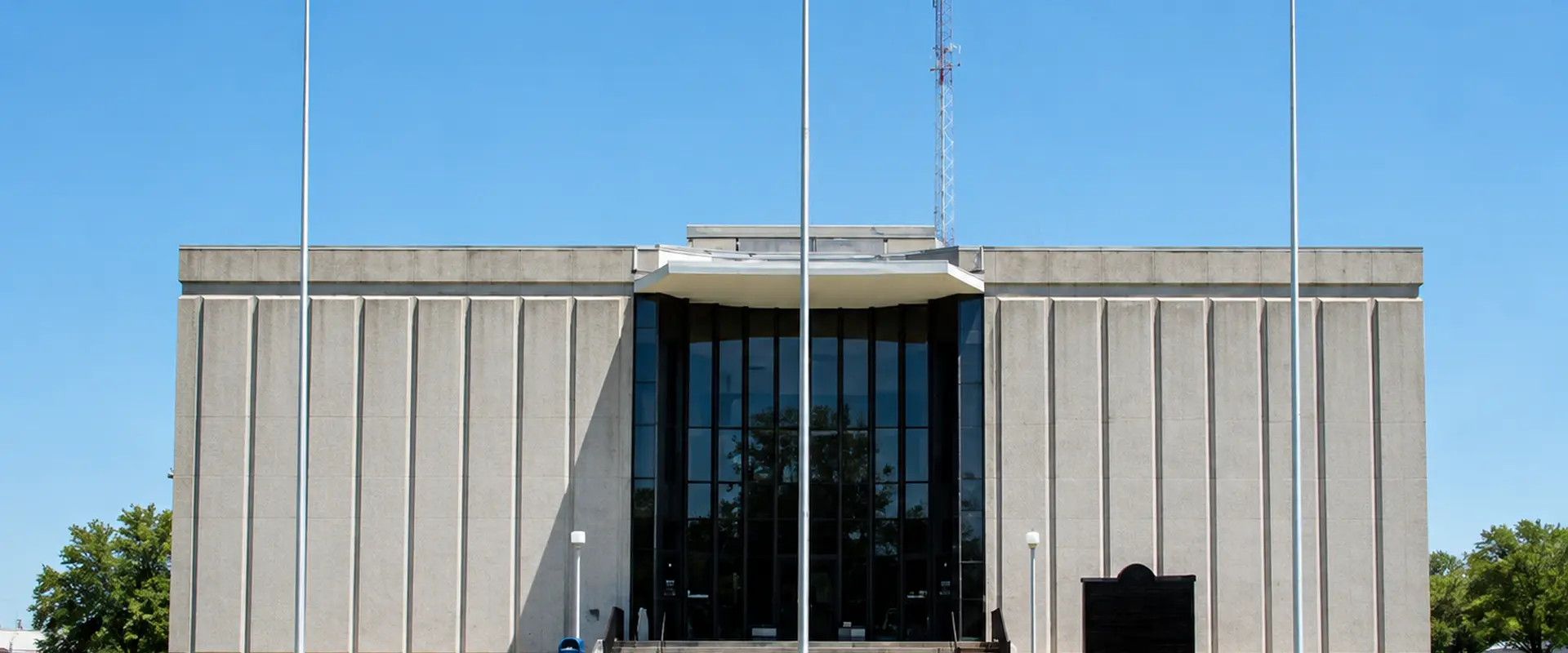
The mid-century courthouse located in Watseka is the center of the county's court system. It contains the Iroquois County Circuit Court and the Clerk of the Circuit Court's office. The Clerk's office is the repository of the county's criminal, civil, family, probate, traffic, and small claims cases, files documents, processes payment of court costs, and provides certified copies.
Watseka
Address: 550 South 10th Street, Watseka, IL 60970
Phone: (815) 432-6950
Website: Iroquois County Courthouse
Legal Help and Self-Help Resources
Iroquois County citizens do not have to face a legal problem on their own. Services are available to many citizens of the county. Programs exist for seniors, veterans, domestic violence victims, and those with difficult circumstances.
 Free Legal Assistance
Prairie State Legal Services provides free civil legal assistance to low-income, elderly, and disabled people eligible for services in matters including housing, family law, public benefits, and consumer cases, and aids any domestic violence victim, regardless of income, from the Kankakee office serving the Iroquois County population. The website Illinois Legal Aid Online provides free statewide legal information, guided forms, and a self-help resource website. Harbor House offers 24-hour domestic violence crisis hotlines, emergency shelter, and help with orders of protection.
The Veterans Assistance Commission of Iroquois County helps veterans, their surviving spouses, and children with claims and paperwork for government benefits, and also assists those eligible with emergency aid. Local volunteer services are available through Volunteer Services of Iroquois County, which provides advocacy to the elderly or disabled, particularly with government and community program assistance for many issues, including problems involving guardianship and estates.
 Local Legal Support
People who can't afford an attorney should use Illinois Court Help, a toll-free, statewide service that answers general court process questions by telephone and text and provides access to standardized court forms available from the Illinois Supreme Court. Although court staff explain how the process works and help locate the correct forms, they do not provide legal advice. For cases where an attorney is recommended, the Illinois State Bar Association offers a referral service that matches Illinois residents with attorneys across various practice areas.
FAQs
What is the fastest way to look up an Iroquois County case online?
For online-filed cases, the state's re:SearchIL system is a great source of information. However, it is not accessible through a full search without registering and complying with the Illinois Remote Access Policy. Sealed or suppressed case information is inaccessible.
Why is Iroquois County paired with Kankakee in the same circuit?
Illinois counties are divided into judicial circuits. Kankakee and Iroquois counties comprise the 21st Judicial Circuit. Although judges and employees serve the circuit and not individual counties, each county has its own courthouse and Circuit Clerk. A party conducting a records search should be concerned about this combination. An individual who is a resident of or close to the border could be located in either courthouse. Records for the counties are obtained through the individual county Circuit Clerk's office, and a records search will often span both counties.
What counts as a small claims case in Illinois?
Small claims are money judgments of no more than $10,000, not including interest and costs. Cases filed under this division employ a less formal procedure designed to be conducted without an attorney. Any case seeking more than $10,000 or non-monetary relief should proceed through the normal civil division. Before forms are prepared at all, the clerk of the circuit court will direct a filer to the proper division, thereby circumventing a transfer from one division to the other.
Is every hearing held in person at the Watseka courthouse?
Not anymore. The county judges are conducting numerous hearings through Zoom, and the clerk is sending out a meeting link in advance. This spares rural and out-of-state parties a long drive. A person must be granted permission to appear remotely before the hearing. Participants must log in under their entire legal name. If one is unsure whether their case is suitable or which courtroom to join, they should contact the Circuit Clerk's office first.
Someone was in an accident near the Indiana line. Could the case be in another county or state?
Maybe. Iroquois County is right on the state line with Indiana, and if the dispute begins very close to the state line, it can easily wind up being filed in a different county or even in Indiana, depending on where it originated. The tools for Illinois courts only go into Illinois courts and will not pick up this filed court case. A site like CourtCaseFinder pulls multiple court dockets simultaneously and pinpoints where the records are held and which court they are in, sparing the user from guessing and having to retry.
Other Counties in Illinois
- Adams
- Alexander
- Bond
- Boone
- Brown
- Bureau
- Calhoun
- Carroll
- Cass
- Champaign
- Christian
- Clark
- Clay
- Clinton
- Coles
- Cook
- Crawford
- Cumberland
- Dekalb
- Dewitt
- Douglas
- Dupage
- Edgar
- Edwards
- Effingham
- Fayette
- Ford
- Franklin
- Fulton
- Gallatin
- Greene
- Grundy
- Hamilton
- Hancock
- Hardin
- Henderson
- Henry
- Jackson
- Jasper
- Jefferson
- Jersey
- Jo Daviess
- Johnson
- Kane
- Kankakee
- Kendall
- Knox
- La Salle
- Lake
- Lawrence
- Lee
- Livingston
- Logan
- Macon
- Macoupin
- Madison
- Marion
- Marshall
- Mason
- Massac
- Mcdonough
- Mchenry
- Mclean
- Menard
- Mercer
- Monroe
- Montgomery
- Morgan
- Moultrie
- Ogle
- Peoria
- Perry
- Piatt
- Pike
- Pope
- Pulaski
- Putnam
- Randolph
- Richland
- Rock Island
- Saint Clair
- Saline
- Sangamon
- Schuyler
- Scott
- Shelby
- Stark
- Stephenson
- Tazewell
- Union
- Vermilion
- Wabash
- Warren
- Washington
- Wayne
- White
- Whiteside
- Will
- Williamson
- Winnebago
- Woodford
Table of Contents
