Table of Contents
Greene County Courts, IL *

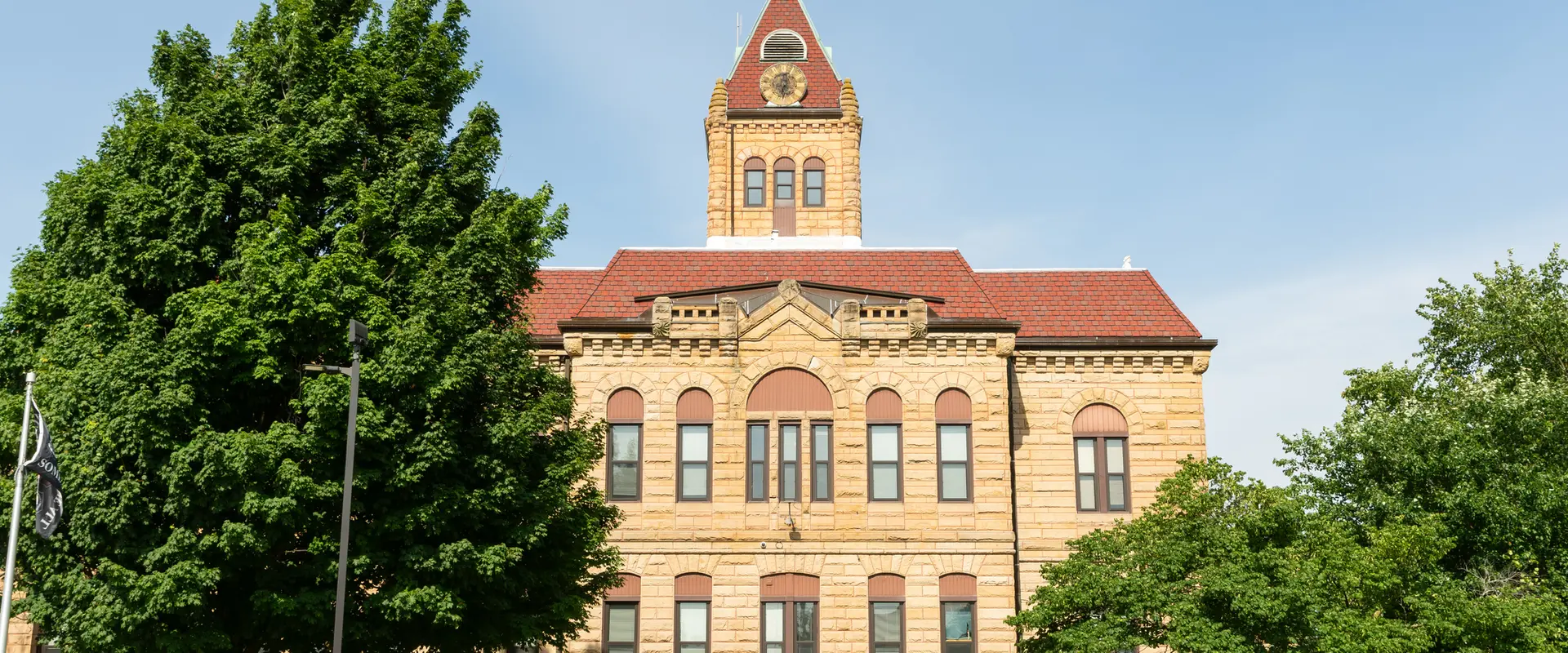
Greene County is governed by the Unified Court System of Illinois, which serves the more than 11,000 people living and working in the region. Most judicial functions take place in the Greene County Courthouse in Carrollton, the county seat. It is home to some of the county's most important offices, including the Circuit Clerk's Office. It is the headquarters of the judiciary in Greene County, and the people look up to the court system daily for various needs. Whether they are filing cases, seeking resolution for their disputes, accessing court records, or interacting with the chambers for other reasons, they trust that they will find answers.
Overview of the Greene County Court System
Greene County is in the 7th Judicial Circuit of Illinois, together with Macoupin, Morgan, Jersey, Scott, and Sangamon Counties. There are 24 other Judicial Circuits in the state, all guided by the Unified Judicial System of Illinois. Here, the courts have a hierarchical structure, with some courts higher than others. Some operate at the state level while others are local, operating within particular circuits. At the highest level in the state is the Supreme Court of Illinois, which oversees lower courts and serves as the final word on appeals from across the state.
The next level of court is the Appellate Court of Illinois, which hears appeals from the county-level courts. This makes it the intermediate court between the local and the state courts. Lastly, within the 7th Judicial Circuit of Illinois is the Circuit Court, which is administered by Circuit Judges across six counties. This is the only court in Greene County, tasked with handling major and minor cases from the residents, including civil, criminal, probate, juvenile, family, traffic, and other matters.
Types of Courts in Greene County, Illinois

Greene County is in the 7th Judicial Circuit, along with five other counties. Apart from the Supreme Court and the state-level Appellate Court, there is one main court in the region: the Circuit Court, the trial court of general jurisdiction.
 Circuit Court
The single court serving Greene County is the Circuit Court, which is part of the 7th Judicial Circuit. The associate judges and circuit judges determine the following cases within the court's jurisdiction:
- Civil matters
- Criminal cases
- Juvenile delinquency and dependency
- Family law
- Probate
- Chancery matters
The 7th Circuit Court of Greene County is the primary court in the region, responsible for handling cases from the entire county. This means that it is the main trial court and the court of general jurisdiction, so it hears many types of cases. Both minor and major cases are tried in these courts by associate and circuit judges who serve throughout the six counties. They serve on rotation, meaning they are not permanently assigned to a single court.
Court proceedings in Greene County take place at the Greene County Courthouse in the county seat, Carrollton, while the judges rotate among the courthouses in the other counties in the 7th Circuit. The chief judge of the circuit can assign cases to the judges, who handle family, probate, criminal, civil, and other matters. If the judgments they pass are disputed by the parties, the cases can be appealed to the Appellate Court for review. However, if the ruling is still unfavorable, the parties can appeal again to the Supreme Court, which will issue the final judgment.
Primary Location: Greene County Courthouse
How to Access Greene County Court Records

Court records in Greene County are accessible to the public, who can review them and obtain copies. The records are in the custody of the Circuit Clerk, whose office collects and maintains them. Interested parties can find these records unless they are sealed or redacted. Such confidential records include records regarding juvenile cases, child abuse, family matters, adoptions, and mental health. Otherwise, other records available for viewing can be accessed in the following ways.
 Online Access
Parties seeking convenient access to court records can do so through online searches. Records from the Circuit Clerk can be found online through the state-wide portal called re:SearchIL. This is a system that joins courts in Illinois, allowing inquirers to find records from various courts in the state. People can conduct searches using the case number, the names of the parties involved, the attorney's name, and other identifying markers. Through this portal, they can find case details and search from anywhere in the county. At the touch of a button, the system will provide instant access to the inquirers.
 Alternative Online Options
Another convenient online platform that residents can use to find out case details in Greene County is CourtCaseFinder. What makes this system different is that its database is larger than most state-provided databases. Instead of compiling records from a single state or county, this system goes a step further by providing access to all the courts across the country. This means that the database contains records from all the states and the courts in their counties. It comes in handy for legal professionals or other parties who would like to view records from multiple courts distributed in different locations.
 In-Person Requests
There are cases where the court records in question are not available on any online search portal. This may happen if they are older records or predate electronic filing. The parties may also be searching for fully certified records, which can only be obtained in person from the Circuit Clerk's Office. People can visit the county courthouse and ask for help since the clerk is the official custodian of the records. To narrow the search, residents should include the case number and the names of the people involved. If they are not sure, they can provide details such as the estimated dates the cases were filed.
 Archived Records
Sometimes the records residents seek are not available online and are not at the Circuit Clerk's office. This can happen if the records are older and not yet digitized. Luckily, Illinois, through the Office of the Secretary of State, keeps a database of all older and archived records. Parties can access them through the Illinois Archives Database, a compilation of historical documents, genealogical accounts, old probate cases, records from state universities, and more. This comes in handy, especially for students, researchers, and parties tracing family roots who need details from records dating back over a hundred years.
For Attorneys and Legal Professionals
Attorneys and legal professionals working in Greene County know how important it is to access court records. They need the information when researching and preparing for their case, so they need a reliable, convenient system that provides the details they need instantly. Online search records come in handy for this, allowing them access to the records they need from wherever they are. Online records are even better when they involve third-party sources with massive databases, allowing access to multiple records at once from anywhere in the US.
Professionals also know that there are guidelines and procedures to follow when filing cases in Greene County. They also know that the state has its own rules for interacting with the Supreme and Appellate Courts, and they are expected to adhere to the local rules of the 7th Judicial Circuit. Legal professionals will want to follow these rules because they don't want anything to interfere with their cases and want to represent their clients well.
How to File a Case in Greene County

Parties can file cases with the Circuit Court of Greene County either as legal professionals representing clients or self-represented individuals. The goal is to follow the steps below to ensure a successful case.
Step 1: Choose the Correct Court
Unlike other counties in the United States, Greene County, Illinois, has only one main trial court: the Circuit Court. So when someone files a case at the local level, it will likely go to the county courthouse, where judges will be assigned to the case. Residents of Greene County must determine what kind of case they are dealing with, whether it is a family, probate, criminal, eviction, traffic, juvenile, or any other kind, before filing. If not sure, the Circuit Clerk's office can verify and answer questions.
 Step 2: Complete Required Forms
The Circuit Clerk can also assist inquirers who need access to filing forms. These can be obtained online through the Circuit Clerk's official website in the Forms section and downloaded, or residents can visit the Circuit Clerk's office in person for assistance. When they receive these important documents, residents should carefully look through them, filling in the blanks and answering all the questions correctly. These forms provide more information about the case, so they must be filled out carefully. Parties should double-check to be sure, and if they are stuck, they can ask for help at the Circuit Clerk's office.
 Step 3: File the Case
Parties can then file the case either in person or electronically, but as of 2018, Illinois mandated that all civil cases must be filed electronically, with few exceptions. The filing system is used throughout the state, making the process more convenient for professionals and self-represented parties. The system, called eFileIL, unites all the courts in Illinois, making it easier to access court records and track case progress. Cases at the Supreme, Appellate, and Circuit Courts are all filed using the platform. Users only have to log in to the system and then use the credentials to access it in the future.
 Step 4: Pay Filing Fees
Cases can only be successfully filed when accompanied by the relevant filing fees, which are payable through the Circuit Clerk's office. Since the cases coming through the court differ and the magnitudes are not the same, the payment tends to vary, with larger cases having higher fees. Residents who want to make court fee payments can do so at the clerk's office or online. If they are from low-income backgrounds or they genuinely cannot pay the full amount, they can request a waiver through the Application for Waiver of Court Fees.
 Step 5: Serve the Other Party
The next step parties take is to serve the opposing side, the party against whom the case is being filed. The law requires that this be done in advance and through a third party to serve as formal notice, so that they, too, can start preparing for the case, which at least makes it fair for both sides. The filers serve the papers through the sheriff or through a certified process server. Since it is a mandatory process, once it is done, they will show proof to the court, and only then can the case be cleared to proceed.
 Step 6: Monitor the Case
During the filing process, each case is assigned a case number, a unique identifier that individuals and legal professionals can use to refer to the case or track its progress. They will enter this number into the eFileIL system when monitoring their cases or provide it at the Circuit Clerk's office when seeking more information in person. Tracking the case provides the filer with important information, such as when the case is mentioned, when hearing dates are set, or when changes could affect the case's future. This notifies them in advance so they always stay prepared.
Greene County Courthouse Directory
There is one main trial court functioning in Greene County. Residents and legal professionals can contact the office through:
Greene County Courthouse
Housing the 7th Judicial Circuit Court in Greene County, as well as the Circuit Clerk's office.
Carrollton
Address: 519 North Main Street, Carrollton, IL 62016
Phone: (217) 942-3421
Website: Greene County Courthouse
Legal Help and Self-Help Resources
Not everyone in Greene County can access legal representation equitably. Low-income residents, the elderly, veterans, and people living with disabilities may need legal assistance. That's why the following organizations step in to help.
 Free Legal Assistance
One non-profit that serves people from marginalized communities in Illinois is Prairie State Legal Services. This agency targets low-income families, senior citizens, and veterans, ensuring they have access to qualified legal representation. They assist with matters such as evictions, employment, and family law and offer advice to residents who need it. There is another organization that serves the legal needs of veterans in Greene County and across the state. The National Veterans Legal Services Program (NVLSP) offers assistance to discharged veterans and those on active duty. Their goal is to ensure they receive their benefits and have everything they need to get their lives back on track after serving their country.
 Local Legal Support
People interacting with the courts for the first time may find the process overwhelming, but the Greene County Legal Self-Help Center helps make it easier. They provide assistance to residents, helping them access the resources they need to get started and breaking down the legal process so they can better represent themselves in court. There is another agency that the people of Greene County can look up to, called the Land of Lincoln Legal Aid. This non-profit works with low-income citizens and the elderly, providing free legal support through litigation, especially for complex matters such as civil cases, housing, family, and employment.
FAQs
How can I track my case after filing in Greene County?
The most convenient way to monitor a case after filing is through the eFileIL system, which provides details on cases filed electronically in the state. Alternatively, filers can find out more about their cases through the Circuit Clerk's office, which notifies them of updates.
Where are the court records in Greene County kept?
The custodian of all Circuit Court records is the Circuit Clerk. This office is where the records are collected, compiled, organized, and maintained. Any resident who wants access to them will find the records provided by the Circuit Clerk's office. Only archived records can be found in separate archive databases.
Are court records public in Greene County?
Yes, the records from the Circuit Court in Greene County and other counties in Illinois are accessible to the members of the public. They can preview and retrieve them through various methods, and no one is mandated to deny them access. As long as they are available, parties can find them.
Which court records are sealed in Greene County?
Most records in Greene County are accessible to the public, but some are not. These are kept private or sealed to protect the privacy of the parties involved or in accordance with a court order. The records may be from matters like child abuse, juvenile cases, family law, adoptions, and other cases where minors are involved.
What is the most convenient way to access court records in Greene County?
While there are different ways to access court records in Greene County, online searches remain the most convenient method for inquirers. Records are retrieved instantly at the touch of a button, and when working with third-party platforms like CourtCaseFinder, parties can access a larger database featuring records from all the county courts in each state.
Other Counties in Illinois
- Adams
- Alexander
- Bond
- Boone
- Brown
- Bureau
- Calhoun
- Carroll
- Cass
- Champaign
- Christian
- Clark
- Clay
- Clinton
- Coles
- Cook
- Crawford
- Cumberland
- Dekalb
- Dewitt
- Douglas
- Dupage
- Edgar
- Edwards
- Effingham
- Fayette
- Ford
- Franklin
- Fulton
- Gallatin
- Grundy
- Hamilton
- Hancock
- Hardin
- Henderson
- Henry
- Iroquois
- Jackson
- Jasper
- Jefferson
- Jersey
- Jo Daviess
- Johnson
- Kane
- Kankakee
- Kendall
- Knox
- La Salle
- Lake
- Lawrence
- Lee
- Livingston
- Logan
- Macon
- Macoupin
- Madison
- Marion
- Marshall
- Mason
- Massac
- Mcdonough
- Mchenry
- Mclean
- Menard
- Mercer
- Monroe
- Montgomery
- Morgan
- Moultrie
- Ogle
- Peoria
- Perry
- Piatt
- Pike
- Pope
- Pulaski
- Putnam
- Randolph
- Richland
- Rock Island
- Saint Clair
- Saline
- Sangamon
- Schuyler
- Scott
- Shelby
- Stark
- Stephenson
- Tazewell
- Union
- Vermilion
- Wabash
- Warren
- Washington
- Wayne
- White
- Whiteside
- Will
- Williamson
- Winnebago
- Woodford
Table of Contents
