Table of Contents
Fayette County Courts, IL *

Fayette County is characterized by beautiful agricultural landscapes and a relatively scarce population of about 21,000 citizens. Modern community services and infrastructure are mostly managed from its county seat at Vandalia, balancing its rural nature. It is also here that most of the judicial services are centralized.
Since the court system in Fayette County is a single-tier system, it has the authority to enforce state laws and maintain safety. Under this structure, residents can get solutions for a wide range of legal matters, ranging from disputes between family members, small claims, criminal proceedings, and housing issues. Court services are not always about settling conflicts. Individuals might also need court records or to get magisterial services such as marriage officiation.
Overview of the Fayette County Court System
The jurisdiction of courts in Fayette is managed under the Illinois Court System. It has three court levels with the Supreme Court as the highest authority. The Appellate Court is the mid-level jurisdiction, and at the bottom, the Circuit Court has limited judicial authority over the state's counties.
In Fayette County, the Circuit Court's operations are defined by the 4th Judicial Circuit. Under this model, residents can get legal closures for all case types, from the most minor infraction to serious felonies carrying weighty sentences. In case one disagrees with the decision made, there is an option of filing an appeal to the Illinois Appellate Court and additional reviews to the Supreme Court.
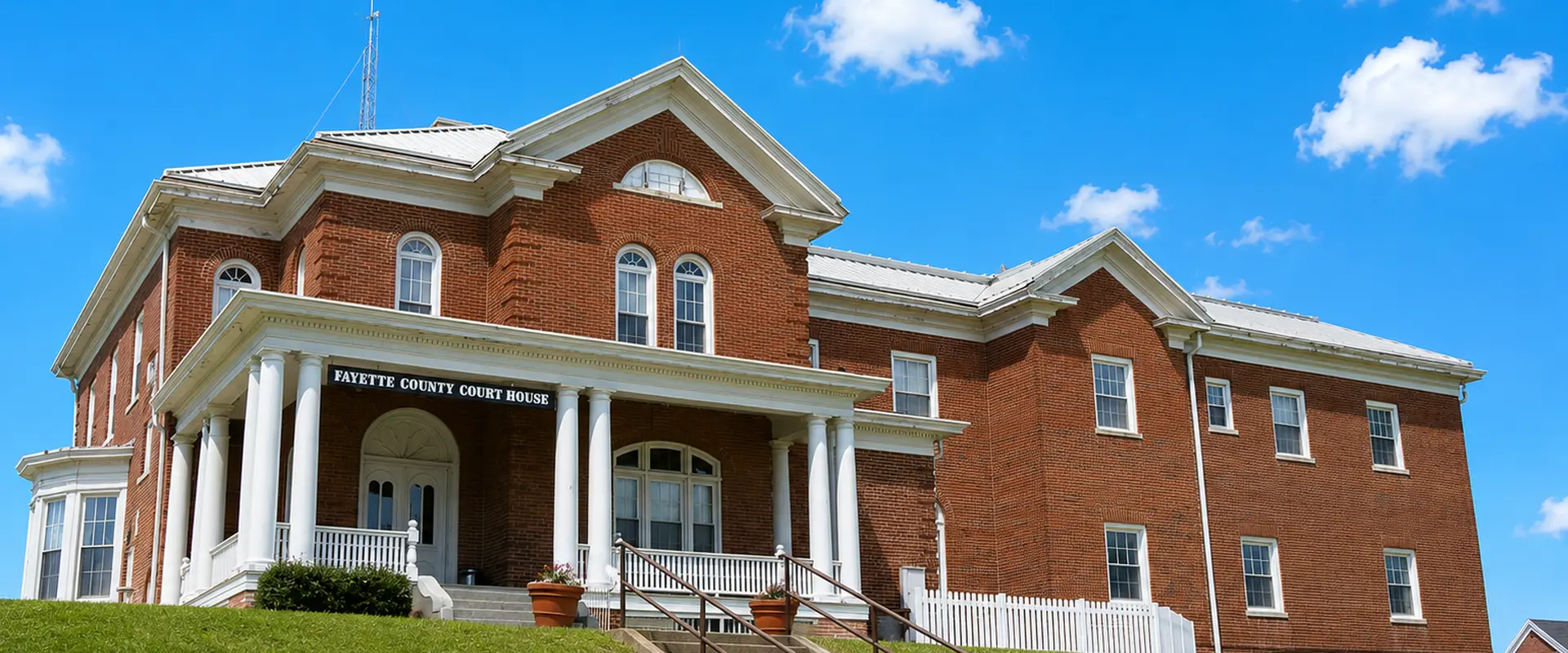
The judicial services are mainly delivered from the Fayette County Courthouse. To remain organized, given the caseload, the Circuit Court is divided into divisions depending on the nature of the case. Residents with active cases may find them classified under different categories, such as civil, criminal, probate, juvenile, and family law. Each division has online and physical access points.
Types of Courts in Fayette County, Illinois

Being the sole trial court in Fayette County, the Circuit Court manages its caseload through organized divisions. Residents can rest assured that they will get a fair due process, as the specialization ensures cases are handled with expertise. In the breakdown below, these divisions are explored with the legal matters they address.
Primary location: Fayette County Courthouse
 Criminal Division
Except for offenses by juveniles, all crimes committed within Fayette County are addressed through the Criminal Division provided under the Circuit Court. Depending on the severity, the Circuit judge hears all proceedings from preliminary hearings to sentencing. Some of the cases referred to the Criminal Division include:
- Felonies classified under Classes 1 to 4 and Class X
- All levels of misdemeanor charges with fines only
- Traffic violations within Fayette County, such as DUI
- Protection orders for criminal-related matters, such as stalking
- Petition to seal criminal cases
The intention of the Criminal Division is to decrease incarcerations and restore justice. It partners with the Probation Department to rehabilitate defendants beyond the prison walls through supervised programs and mandatory court appearances.
 Civil Division
In the Circuit Court, private matters between organizations or individuals are resolved under the Civil Division. Since there is a single court level, there is no limit on the amount made on claims. If residents disagree with the decision, they can take the matter to the Illinois Appellate Court. The cases heard in this category include:
- Proceedings on eviction notices
- Conflicts on real property
- Foreclosure disputes
- Small claims below $10,000
- Lawsuits on personal injury and contract disagreements
All civil cases in Fayette County must be filed electronically as part of recordkeeping management. Even when the case is in motion, parties can opt to use a mediator provided by the Fourth Judicial Circuit to settle their matters out of court.
 Family Division
The Family Division under the Circuit Court is responsible for representing the best interests of children and settling separation disputes legally. Most of these domestic issues are heard confidentially to preserve the privacy of the parties to the case. Some of the matters resolved among family members often involve:
- Divorce and parental rights
- Enforcing child support orders
- Establishing alimony or spousal maintenance
- Adoption and child custody
Some of the responses to domestic issues are overseen by the Family Violence Coordinating Council, which ensures protection orders are enforced consistently throughout the 4th Judicial Circuit.
 Probate Division
Decedents in Fayette County may not always leave a valid will, leading to disputes on estate administration and heirship. Under the Circuit Court, these matters are settled under the Probate Division. Specifically, residents can seek legal services if their issues are about:
- Selection of an independent administrator to run the estate
- Guardianship of minors and adults unable to care for themselves
- Will's declaration and distribution of assets
- Debt settlement related to estate construction
Probate matters are time-sensitive and must be initiated within the specified application window. In Fayette County, there is no exact deadline, but it is advisable to take early action to avoid confusion about account access.
 Juvenile Division
Child cases do not always involve delinquency. They might also be about welfare, dependency, and safety. In Fayette County, these matters involving minors aged 18 and below are settled under the Juvenile Division. Proceedings overseen by the assigned Circuit Court judge include:
- Misconduct among minors
- Drug possession and substance-related crimes
- Proceedings on child dependency
- Motions over authoritative intervention for some delinquencies
For misdemeanors and felonies among minors, the juvenile division seeks to reintegrate offenders into the community rather than punish them. It coordinates with the Juvenile Justice Council to distribute resources and enforce policies that decrease recidivism.
How to Access Fayette County Court Records

Court records in Fayette County are available for public view, except for cases restricted for their sensitivity, such as juvenile proceedings. Generally, residents can access records through the online and offline methods below.
 Online Access
In Fayette County, court records are primarily accessible through re:SearchIL. It maintains records of all the cases heard in Illinois County. For this site, users have to register an account using eFileIL and use the details to access the database. For the search to yield results, the court handling the case must opt into the system and upload orders, motions, and case transcripts for civil, criminal, family, and probate matters. When searching, one must ensure they avoid errors, which can lead to void results or no results at all.
 Alternative Online Options
While the official sites are reliable, starting the search using third-party sites is more helpful for new users who may not understand certain requirements, such as the case number. CourtCaseFinder is most sought by users who have the name of the case but not the specific details. When one enters the keyword, the site pulls all the case types with the matching concept. Since records are aggregated in one place, requests do not have to move through multiple portals to compare lawsuits. They can also narrow down the court records to the specific county, which is Fayette County in this case.
 In-Person Requests
Online searches may not yield relevant results if the case has not been digitally indexed or if it is restricted. Even after pulling the results, requesters need to verify their usability in court. These reasons can be solved through in-person visits at the Circuit Clerk's office, which is open Monday through Friday, except on holidays. Requesters should be ready to pay a copying fee, which depends on the page numbers of the record.
 Archived Records
In Fayette County, the most reliable record finder for archived court records is the Illinois Regional Archives Depository (IRAD). It maintains case transcripts and summaries in physical copies, and the only way to get complete court records is to visit IRAD's main office during regular working hours. The cases span back to 1821 and have indexes for major cases such as wills, property disputes, docket history, and proceedings on mental health commitment.
For Attorneys and Legal Professionals
Attorneys and professionals with legal duties in Fayette County have additional privileges when accessing court records. For example, re:SearchIL is publicly available for basic searches that do not require a user account. Additional records that may be pertinent to court proceedings can be obtained from the Illinois State Police CHRI system. It allows prosecuting attorneys to know about the criminal history of the defendant, which can be used to update a case they are handling. The credentials as an attorney in practice give them better clearance levels.
Even with their credentials as the standing counsel, it is possible for attorneys to be denied access if the court record is restricted. In this case, they must make a written request that goes through the Circuit Clerk's office. If the requester proves their user role as the legal representative, they have better chances of having the court order approved.
How to File a Case in Fayette County

Filing a case in Fayette County requires thorough planning to avoid missing important steps that lead to rejected forms and sometimes a case dismissal. Once the complaint is established, the steps below should be completed in order to activate the lawsuit successfully.
 Step 1: Choose the Correct Court
Fayette County is only served by one Circuit Court, but it has multiple divisions that ensure every proceeding is given the attention it deserves. The Civil, Criminal, Family, and Juvenile Divisions handle all case types, from minor claims below $10,000 to serious felonies with significant jail terms. If one is unsure of the nature of their case, they should consult the Circuit Clerk's office for guidance.
 Step 2: Complete Required Forms
Once the court division is located, the next step is to download and fill out the forms that suit the complaint. In Fayette County, residents can find forms for lawsuits such as protection orders, foreclosures, and divorces from the E-File Forms and Filing Fees page provided through the Circuit Clerk's office. For those forms not available online, an in-person visit to the office provides better directions, which should not be mistaken for legal advice.
 Step 3: File the Case
For criminal and civil cases, the completed forms in Fayette County must be filed electronically through eFileIL. It is a statewide portal that requires users to create an account to upload forms for all case types. Users who find trouble using the system can get instructions from the Circuit Clerk. If delivery is in-person, users should bring two additional copies for the defendant and recordkeeping by the court's office. Once the forms are accepted, the filer is issued a case number, which is used for monitoring the case status.
 Step 4: Pay Filing Fees
At the time of the submission, a fee is charged depending on the case type. In Fayette County, residents can estimate the total cost by reviewing the filing fees schedule provided by the Circuit Clerk. If the costs are unmanageable, filers can apply for a Waiver of Court Fees with supporting financial information showing inability to pay. The judge approves most reviews if they have proper documents such as income statements, proof of government benefits, and housing arrangements.
 Step 5: Serve the Other Party
Proceedings cannot begin if the defending party is not aware of an open case against them and given time to respond. In Fayette County, these summons are done formally through the Sheriff's office. After confirming the defendant has received the court forms, the Sheriff completes and returns the affidavit to the Circuit Clerk's office for processing. The confirmation puts the case in motion.
 Step 6: Monitor the Case
In Fayette County, residents can stay updated on deadlines by following up on their cases on re:SearchIL, which is useful when one wants to know whether the other party to the case is involved in another lawsuit. Updates can also be received through SMS once users register with the Circuit Clerk. Missing a court date has serious consequences, like a judge issuing a warrant of arrest for criminal cases or a default judgment for civil matters.
Fayette County Courthouse Directory
Residents in Fayette County receive judicial services under one courthouse with divisions that specialize in family law, civil issues, crimes, probate, and juvenile misconduct and protection. The directory outlines three ways in which residents can access the court system.
Fayette County Courthouse
Residents asked to appear in the Circuit Court will find the venue in one of the courtrooms in the facility. The assignment depends on the nature of the case.
Vandalia
Address: 221 S. 7th Street, Vandalia, IL 62471
Phone: (618) 283-5009
Website: fayettecountyillinois.gov/county-offices/circuit-clerk/
Legal Help and Self-Help Resources
While having an attorney is advisable, especially in criminal cases, residents in Fayette County can still manage the procedural requirements through the many legal resources. Depending on the nature of the judicial service, the following organizations and programs can be accessed locally, in person, or through online portals.
 Free Legal Assistance
Most of the organizations below are statewide, but they are still accessible to citizens of Fayette County by phone or online registration. They include:
- Land of Lincoln Legal Aid helps low-income individuals with civil matters, including family law and housing, in central and southern Illinois. Residents in Fayette can reach the organization by calling (877) 342-7891 and explaining the issue to see if it is within the services offered.
- Illinois Legal Aid Online (ILAO) is for residents who want to learn about the law, including court procedures and self-representation. In addition to interactive information and guides, the organization connects residents with legal issues to volunteer lawyers.
- Illinois Armed Forces Legal Aid Network (IL-AFLAN) primarily handles civil cases involving retired and active-duty service members, advising them on benefits, discharge upgrades, and housing.
 Local Legal Support
For programs and organizations specific to people of Fayette County, the list below is recommended as the first contact point:
- The Circuit Clerk's office contains items that would typically be required for court services, such as forms.
- Programs and Services under the 4th Judicial Circuit help residents find information on most court procedures, such as alternative dispute resolution, legal ways to recover damages, and amicable settlement of probate matters.
- SWAN Inc. is for survivors who have been subjected to domestic violence and children exposed to abuse and neglect. It also has a referral program that connects vulnerable groups with mentors and resources, such as emergency housing.
FAQs
Can one receive notifications for case updates without manually checking online?
Yes. Residents can receive SMS notifications from the Circuit Clerk's office by signing an opt-in form that permits them to receive court updates. There is an option to sign out if the carrier charges are too high. In addition to monitoring active cases, self-represented litigants can also request assistance by sending the word "Support."
When is it helpful to use a third-party records finder?
Third-party sites are particularly useful when one is new to the system and does not have the specific details, such as a case number, required to start basic searches in official portals. CourtCaseFinder allows residents to initiate name-based searches that pull cases on all the case types filed in the US. Using the filters fine-tunes the results to show only records for cases filed in Fayette County.
Can one find Circuit Court case records via online searches?
Yes. Residents can conduct basic searches for non-restricted cases using re:SearchIL. They only need the case number or the party's name to begin the research. The portal covers all types of cases, from major civil and criminal offenses to family, probate, and traffic violations. Once the details are obtained, the next step is to verify the records with the Circuit Clerk to ascertain that they can be used for official purposes.
For family and civil cases, does the county provide mediation, and is it required?
Mediation is only used when the situation allows, the parties agree, and it is not a legal requirement. For dissolution cases involving children, it should be noted that a parenting education class must be completed through a court-approved program. Mediation of issues involving children is not part of civil mediation, so different mediator lists apply.
Other Counties in Illinois
- Adams
- Alexander
- Bond
- Boone
- Brown
- Bureau
- Calhoun
- Carroll
- Cass
- Champaign
- Christian
- Clark
- Clay
- Clinton
- Coles
- Cook
- Crawford
- Cumberland
- Dekalb
- Dewitt
- Douglas
- Dupage
- Edgar
- Edwards
- Effingham
- Ford
- Franklin
- Fulton
- Gallatin
- Greene
- Grundy
- Hamilton
- Hancock
- Hardin
- Henderson
- Henry
- Iroquois
- Jackson
- Jasper
- Jefferson
- Jersey
- Jo Daviess
- Johnson
- Kane
- Kankakee
- Kendall
- Knox
- La Salle
- Lake
- Lawrence
- Lee
- Livingston
- Logan
- Macon
- Macoupin
- Madison
- Marion
- Marshall
- Mason
- Massac
- Mcdonough
- Mchenry
- Mclean
- Menard
- Mercer
- Monroe
- Montgomery
- Morgan
- Moultrie
- Ogle
- Peoria
- Perry
- Piatt
- Pike
- Pope
- Pulaski
- Putnam
- Randolph
- Richland
- Rock Island
- Saint Clair
- Saline
- Sangamon
- Schuyler
- Scott
- Shelby
- Stark
- Stephenson
- Tazewell
- Union
- Vermilion
- Wabash
- Warren
- Washington
- Wayne
- White
- Whiteside
- Will
- Williamson
- Winnebago
- Woodford
Table of Contents
