Table of Contents
Edwards County Courts, IL *

Established in 1814, Edwards County is one of the oldest counties in Illinois. The county seat is in Albion, where all legal matters arising in the county are heard. The county shares the 2nd Judicial Circuit with 11 other counties, including Hardin, Gallatin, White, Hamilton, Franklin, Wabash, Wayne, Jefferson, Richland, Lawrence, and Crawford. The Circuit Court located in the county's courthouse has general jurisdiction over all legal matters, such as property disputes, child custody proceedings, divorce, and traffic violations.
With a population of 6,245 and a population density of 26 persons per square mile, the county is classified as rural. Agricultural contracts, timber rights, hunting regulations, and property boundary issues are some of the legal matters heard in the courts that are influenced by this rural character. The clerk maintains the court records in the county and helps residents access them.
Overview of the Edwards County Court System
Illinois courts follow a unified court structure. Under this arrangement, the Circuit Courts have general jurisdiction over all legal matters arising at the county level. As part of the 2nd Judicial Circuit, the Circuit Court in Albion handles all legal matters, including civil cases, criminal cases, misdemeanors, divorce proceedings, and even traffic violations. There are no municipal and town courts operating in the county. The courthouse has a dedicated clerk's office that helps residents select forms when filing their cases, collects fees, and answers all inquiries from the county residents regarding the court procedures.
Appellate Courts are the second tier of courts in the tiered structure. This is where residents who are not satisfied with the judgments they receive from the Circuit Court can file their appeals. If a litigant believes they have not received the correct or fair judgment in these courts, then they can file another appeal at the Supreme Court, which sits at the top of the unified court structure.
Types of Courts in Edwards County, Illinois

Residents who understand the nature and complexity of their case will have an easier time determining which court hears it. All cases are heard at the Edwards County Courthouse. Below is a comprehensive breakdown of the Circuit Court's main divisions and the cases the judges hear.
 Criminal Court
The Criminal Court is a division of the Edwards County Circuit Court. It handles all criminal cases, including misdemeanors and cases that rise to a serious felony level, such as assault and homicide. Cases heard in this court include:
- Homicides
- Class 4 felonies
- Class X felonies
- Misdemeanors and petty offenses
- Drug offenses
- Theft and assault
Traffic violations that are beyond simple infractions, such as aggravated speeding and driving under the influence, go to this court rather than being handled administratively.
 Civil Court
The Civil Division of the Circuit Court handles disputes between private parties in the county. These include both small claims and large civil matters. Some of the cases the court handles include:
- Landlord-tenant disputes
- Property boundary disputes
- Personal injury claims
- Civil disputes up to and not exceeding $50,000
- Small claims below $10,000
- Contract disagreements
Illinois courts provide residents with self-help resources that they can use to navigate the legal system if they choose to represent themselves. The process of self-representation is straightforward when compared to standard civil litigation.
 Probate Court
This court is where cases involving the administration of estates, such as inheritance, unresolved debts, and contested wills, are heard. Some of the main cases the court handles include:
- Guardianship proceedings
- Conservatorship proceedings
- Distribution of the deceased individual's estate
- Verification of wills
The Probate Act of 1975 governs these proceedings, where small estates qualify for a simplified court process, with larger ones going through the formal probate process.
 Family Court
This court handles all family law matters. Procedures in this court are slightly different from those of the other courts because of the sensitive nature of some of the matters. Some of the cases the court handles are:
- Child support enforcement
- Orders of protection
- Adoption proceedings
- Divorce proceedings
- Child custody and parenting time arrangements
Changes made to the law in 2016 require that proceedings in this court follow an allocation of parental responsibility framework.
 Juvenile Court
This court operates as part of the Circuit Court and handles all legal matters involving residents under the age of 18. Some of the cases the court handles include:
- Delinquency matters
- Truancy
- Child neglect cases
- Child abuse or abandonment cases
Proceedings in this court are done in private. The court treats records in this case with heightened confidentiality and generally seals or restricts them.
 Drug Court
The Drug Court is a specialty court designed to handle and help residents in cases that involve:
- Substance abuse
- DUI and other related drug charges
The primary objective of this court is to rehabilitate individuals with drug use disorders rather than punishing the offenders. This approach is effective because it reduces recidivism compared to traditional criminal processing.
How to Access Edwards County Court Records

Public access to court records is governed by the Illinois Freedom of Information Act and the Supreme Court's rules. Some records in cases such as juvenile and family law matters have restricted access. Below are the ways to access public records.
 Online Access
re:SearchIL is the online statewide portal managed by the Administrative Office of the Illinois Courts that hosts records for online viewing. Residents can access court records filed electronically using this platform.
 Alternative Online Options
CourtCaseFinder provides a broader records search to residents because it collates case information from multiple jurisdictions across counties and states. It aggregates this information from public sources; it is a good starting point when searching for records. Residents should always confirm the information they obtain there with official sources, which are usually up to date.
 In-Person Requests
As much as online platforms are the most convenient option to access court records, some records are not accessible online. Records like those of juvenile cases that are sealed and certified copies are accessed in person at the Circuit Clerk's Office. When visiting, one is required to carry as much information as possible, including the party's name, the lawyer's name, and the case filing date. Certified copies require a fee. The time that the records take depends on the complexity of the matter. Some might be accessed the same day, while others might take longer.
 Archived Records
Some older records that predate the digital error might not be accessed through the official online platforms. To access them, one might need to visit the courthouse physically and submit a written request; staff will help access records that go back to 1825. The records are hosted at the Illinois Regional Archives Depository and might require some patience when locating them. It is important to carry as much information on the case as possible to make the process easy.
Residents can also find historical and other older records at the Illinois State Archives. It is a valuable resource for those looking for genealogical records for cases that the courts heard before the digital age.
For Attorneys and Legal Professionals
Current rules require attorneys to file their cases on the official eFileIL system. Attorneys also have the option to use re:SearchIL to access case information from multiple jurisdictions, which is the official statewide portal managed by the Administrative Office of the Illinois Courts. All they need to do is log in to the portal using their credentials.
Practitioners who need to access criminal background checks, information in civil cases, and other legal matters can do so by contacting the clerk's office or visiting in person. The clerk will confirm one's identity and help process the request swiftly. If an attorney needs to access confidential records, they will need to obtain a court order, which will allow the clerk to process the request. The court order requirement ensures that the access and preservation of sensitive records are consistent across all the jurisdictions under the Circuit Court.
How to File a Case in Edwards County

Edwards County allows its residents to file cases even when they cannot afford a lawyer. Below are some steps that one can follow.
Step 1: Choose the Correct Court
When someone wants to file a case, they should know the court that can accept their case. In Edwards County, trial cases are filed at the Circuit Clerk's Office. The circuit court has divisions that deal with all issues, and residents must choose the correct one to avoid dismissal.
 Step 2: Complete Required Forms
Illinois courts have standardized forms that one can obtain from Illinois Legal Aid Online. The website hosts free downloadable forms for many common case types, including small claims, orders of protection, and divorce. The court advises residents to hire an attorney if their case is complex in nature. If one cannot afford an attorney, they use any of the free legal resources listed.
 Step 3: File the Case
Once the forms are filed, the litigant can bring them to the clerk's office or fill them electronically via e-FileIL. If filing in person at the clerk's office, one should bring with them multiple copies of the forms, at least one for each party involved in the case. The clerk will stamp the files with the filing date and assign a case number. One receives automatic confirmations if they file electronically via the e-filing portal.
 Step 4: Pay Filing Fees
Filing fees in Illinois counties are set by statute and vary based on the case type. Small claims generally have lower fees compared to larger civil disputes. Residents can request the fee schedule at the clerk's desk. Fee waivers are also available to individuals based on their income level. The Application to Sue or Defend as an Indigent Person form is available at the clerk's desk for such litigants who cannot afford to pay the fees. The judge will decide based on one's income and the federal income threshold.
 Step 5: Serve the Other Party
According to Illinois law, a litigant should notify the other parties once they have filed the forms and paid the applicable fees. A case cannot proceed if they are not notified. Various service of process options are available, including providing the service information to the clerk's office, which will then coordinate with the Edwards County Sheriff's office in most cases. The litigant can also hire a private server to deliver the papers or choose to publish the notice in a local newspaper if they cannot locate the other party or parties. The litigant should present proof of service to the court.
 Step 6: Monitor the Case
The court will set a hearing and return date once the proof of service is provided. It is the litigant's responsibility to keep track of this date and any other updates. The status of one's case can be checked by visiting the official website that aggregates the county's case information. Do not miss a court date without notifying the judge. The judge can dismiss the case if this happens.
Edwards County Courthouse Directory
Edwards County Courthouse
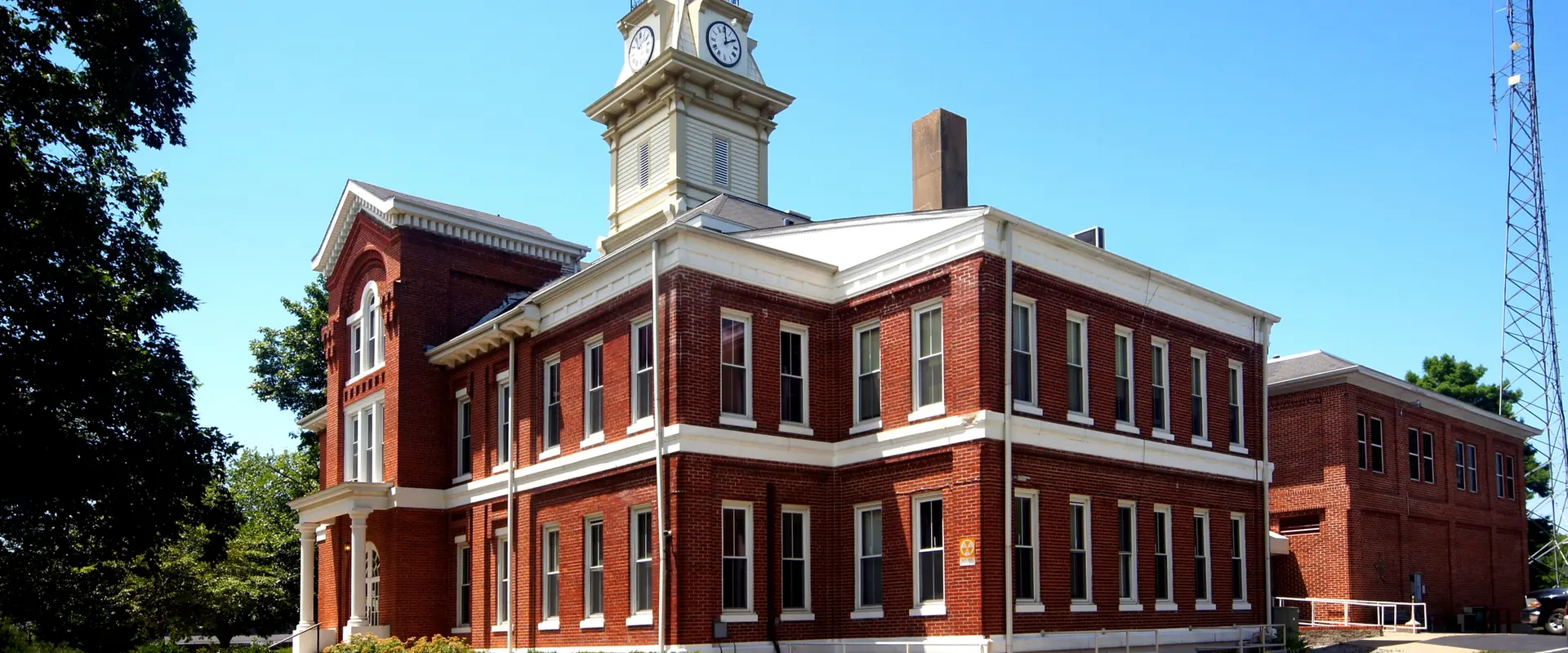
Houses the Circuit Court for the 2nd Judicial Circuit of Illinois. Several court divisions operate here, including the Criminal Court, Civil Court, Family Court, Probate Court, Juvenile Court, and Traffic and Drug Court.
Albion
Address: 50 E. Main Street, Suite 7, Albion, IL 62806
Phone: (618) 445-2016
Website: illinoiscourts.gov/courts-directory/9/Edwards-County-Courthouse/court/
Legal Help and Self-Help Resources
Some Edward County residents might lack the financial resources to hire an attorney for their case. Useful free legal assistance resources exist, though. Some are listed below.
 Free Legal Assistance
Illinois Legal Aid Online is a comprehensive legal aid resource available to Edwards County residents. The website has a collection of legal guides and interactive forms on various legal topics and is written in plain language to make it easy for citizens to follow along. It also includes a live chat function in case one is stuck on any of the steps. Residents can also use the website to access free attorney representation.
The Land of Lincoln Legal Assistance Foundation is another free legal assistance option for the county's residents. Low-income individuals can get help on a wide range of case types, including housing and public benefit issues and family law matters. Similarly, the Illinois Lawyer Finder allows residents to search for attorneys in the county who offer free consultations or reduced-fee arrangements.
 Local Legal Support
Residents can also contact the Edwards County Circuit Clerk's office or visit the official website, where they can find links to forms for common cases. The site also hosts several procedural guides and contact information for many legal aid organizations. This resource is a good starting point for the county's residents.
Domestic violence victims can visit the Crisis Center Foundation to get assistance in such matters. The center provides access to attorneys who can help navigate the courts, especially when filing protection orders. It also connects domestic violence survivors with other local support services.
FAQs
Are court records available for online viewing in Edwards County?
Yes. The re:SearchIL website is an online statewide portal managed by the Administrative Office of the Illinois Courts that hosts records for online viewing. Residents can access court records filed electronically using this platform. If one needs certified copies, they need to contact the Circuit Clerk or visit the courthouse to make an in-person request. CourtCaseFinder is an alternative that county residents can use to perform broader searches for public records across multiple jurisdictions.
Are Edwards County records available to the public?
Yes. Most Edward County records are public. The Illinois Freedom of Information Act and the Supreme Court's Rule 8 indicate that records are public unless the courts have sealed them by a court order or a protected statute. Records that are generally treated as confidential and are generally sealed include records in juvenile, adoption, and some family law cases.
Where can residents obtain vital records in Edwards County?
The Department of Public Health's Division of Vital Records is the official website that residents can use to access such records. Visiting the Circuit Clerk's office in person is also another option. The clerk guides residents on the process for accessing vital records. Residents should allow at least one week for the processing of mailed requests for vital records.
How can one access divorce records in Edwards County?
The Edwards County Circuit Clerk is the official custodian for divorce records. Residents can visit their office, where they will receive guidance on the process for obtaining the records. The clerk can provide certified copies at a fee. Older records might take time to obtain, so plan accordingly when making a request.
Are juvenile records in Edwards County public?
Most times, the courts classify these records as confidential and are often sealed once the case concludes. This rule is designed to protect the privacy of minors, but parents and guardians who need to access records in their child's case can access them by following specific procedures. Other interested parties will need to get a court order in order to do so.
Other Counties in Illinois
- Adams
- Alexander
- Bond
- Boone
- Brown
- Bureau
- Calhoun
- Carroll
- Cass
- Champaign
- Christian
- Clark
- Clay
- Clinton
- Coles
- Cook
- Crawford
- Cumberland
- Dekalb
- Dewitt
- Douglas
- Dupage
- Edgar
- Effingham
- Fayette
- Ford
- Franklin
- Fulton
- Gallatin
- Greene
- Grundy
- Hamilton
- Hancock
- Hardin
- Henderson
- Henry
- Iroquois
- Jackson
- Jasper
- Jefferson
- Jersey
- Jo Daviess
- Johnson
- Kane
- Kankakee
- Kendall
- Knox
- La Salle
- Lake
- Lawrence
- Lee
- Livingston
- Logan
- Macon
- Macoupin
- Madison
- Marion
- Marshall
- Mason
- Massac
- Mcdonough
- Mchenry
- Mclean
- Menard
- Mercer
- Monroe
- Montgomery
- Morgan
- Moultrie
- Ogle
- Peoria
- Perry
- Piatt
- Pike
- Pope
- Pulaski
- Putnam
- Randolph
- Richland
- Rock Island
- Saint Clair
- Saline
- Sangamon
- Schuyler
- Scott
- Shelby
- Stark
- Stephenson
- Tazewell
- Union
- Vermilion
- Wabash
- Warren
- Washington
- Wayne
- White
- Whiteside
- Will
- Williamson
- Winnebago
- Woodford
Table of Contents
