Table of Contents
Clinton County Courts, IL *

Founded in 1824, Clinton County is located in South-Central Illinois and holds Carlyle as the county seat. Clinton County court cases are handled by the Illinois Circuit Court system, with Clinton County sitting within the Fourth Judicial District, a unified circuit covering nine counties, namely Christian, Clay, Clinton, Effingham, Fayette, Jasper, Marion, Shelby, and Montgomery. The Clinton County Court system manages a wide range of cases, which cover both minor and major cases in the county.
The County also holds the largest man-made lake, Carlyle Lake, which was formed by damming the Kaskaskia River and is managed by the U.S. Army Corps of Engineers. This matters legally since it generates overlapping state, county, and federal jurisdiction questions on boating, recreation, waterway accidents, and property abutting Corps of Engineers land, all issues that filter into the Circuit Court docket.
Overview of the Clinton County Court System
Clinton County's court system comprises a single trial court, the Clinton County Circuit Court, that has jurisdiction over civil cases, family matters, criminal matters, probate cases, juvenile cases, housing and eviction cases, small cases, and traffic violations, making it a court of general jurisdiction in the county. The court's official custodian is the Clinton County Circuit Clerk, who is responsible for maintaining all the court-related documents and collecting fines, fees, and costs. The county has no separate municipal or specialty court, so all the legal matters of the county are presided over by the County Circuit Court.
The Clinton County Circuit Court is presided over by a Resident Circuit Judge, the senior local Judicial officer for the county, and an Associate Judge, who together handle the county's dockets. The Court is located inside the Clinton County Courthouse, with all the court operations centralized in a single Carlyle Courthouse, with no satellite court branches.
Types of Courts in Clinton County, Illinois

Residents need to have a much deeper understanding of the Clinton County court system when filing cases and accessing court records.
 Clinton County Circuit Court
 is the unified trial court of records within the county, which is part of the nine-county Fourth Judicial Circuit and represents the single court that presides over all the cases filed in the county. The court is located inside the Clinton County courthouse, where it presides over the following legal matters:
- Civil cases, small claims(SC) up to $10,000, Law Magistrates (LM claims $15,000 to $50,000, and Law (LA) claims over $50,000
- Family law-related matters, Dissolution with Child (DC), and Dissolution without Child (DN)
- Probate and estate matters
- Housing and property cases
- Criminal and traffic matters
- Juvenile legal matters
- Specialized legal cases such as mental health cases
One of the key things to know about the Clinton County Circuit Court is that the court is the court of original jurisdiction for nearly every legal matter that arises in the county, with all decisions made here unless the case is later appealed. The court transitioned completely to a paperless court system with electronic filing, which makes it one of the few county courts in Illinois to transition fully to electronic filing systems within the county.
How to Access Clinton County Court Records

Most of Clinton County's court records are publicly accessible, with a small percentage of the files sealed or restricted. Some of the sealed and restricted records include juvenile records, adoption records, and mental health records. These files are kept private from the public to protect the privacy of minors, parties involved in adoption hearings, and individuals' health records in mental health cases.
 Online Access
For the publicly accessible case records, Clinton County has a state-provided online platform that helps the residents access court records remotely. Using the Search Case Information tab, users can search for docket entries using the case number, the full name of the party involved in the case, or the approximate time when the case was filed.
 Alternative Online Options
Finding cases with insufficient information, such as the type of case, the parties' names, or the case file, can be time-consuming and exhausting while using the state-provided portal due to the functionality of the platform that limits records to casetypes and counties. This means one has to make multiple searches to get the correct records. This introduces alternative online options, such as the CourtCaseFinder, an alternative aggregator platform that pulls records across different public records platforms and provides the user with a single search output, making it easier for users to easily track down their case records.
 In-Person Requests
To access physical case records, certified case records, and archived records, residents have the option to visit the Clinton County Clerk's office. When visiting, it is strategic to ask for help from the staff who have an understanding of the case records filing. It is also important that one brings case identifiers, such as a case number, party names, or the approximate dates when the case was filed. This helps the clerk officials easily track down one's case files.
 Archived Records
Clinton County residents also have access to Clinton County archived case records, which are primarily in hard copies since they predate the digitization of the county court records system. Most of the county records have been transferred to the Southern Illinois University - Illinois Regional Archive Depository as part of the state's long-term preservation program for local government records. The case records accessible include civil and criminal court case files, chancery case files, docket books, probate records, wills, naturalization, and the court board proceedings, most of them dating back to 1874.
For Attorneys and Legal Professionals
To find the current local rules, attorneys need to visit the Clinton County Circuit Clerk's Rule of Practice page on the Fourth Judicial Circuit's official website. For an out-of-county attorney, there are no special local admission requirements. An Illinois-licensed attorney in good standing with the ARDC can file an appearance through the Odyssey eFileIL like a local attorney. Still, for an out-of-state attorney, the Illinois Supreme Court Rule 707 governs pro hac vice practice, where the out-of-state attorney files a verified statement, pays a one-time non-refundable $250 fee per proceeding, completes ARDC registration, and must associate with an active status Illinois attorney who files an appearance. There are exceptions to Rule 707 for attorneys appointed to represent indigent clients, those representing clients of non-profit legal services organizations, and government lawyers representing the United States, but they are first required to submit a written explanation to the ARDC. Attorneys must keep in mind the mandatory e-filing for civil matters through the Odyssey eFileIL using a certified e-filing service provider.
How to File a Case in Clinton County

Among the first interactions Clinton County residents have with the County court system is the case filing process, which is one of the most delicate processes within the court structure. Filers are expected to be careful and attentive to the entire process since errors within the process can result in case rejection or dismissal. Understanding the case filing process gives filers the biggest assurance of a successful case filing.
Step 1: Choose the Correct Court
Clinton County has a single-trial court system, the County Circuit Court, which is a court of general jurisdiction presiding over all minor cases and major cases within the county. The most important thing that the filer needs to understand is the correct division that has jurisdiction over their legal matter, for instance, the Mental Health (MH) Division, the Adoption (AD) Division, the Chancery (CH) Division, and the Probate (PR) Division. With a clear understanding of the different divisions based on different types of cases, the filer is able to easily select the correct case type that their legal matter falls under.
 Step 2: Complete Required Forms
With the correct case type, the filer proceeds to get the correct case forms, which are accessible from the Illinois Supreme Court's approved statewide forms library. Filers can also access the county-hosted case forms from the Clinton County Circuit Clerk's Forms page to the Illinois Legal Aid Online's free forms library. The filers need to note that summons forms vary depending on the case, with divorce, eviction, small claims, and Order of Protection having their own dedicated Summons forms. Residents can get help with filing case forms through the Circuit Clerk's office, which can point filers to the procedural resources but not give any legal advice.
 Step 3: File the Case
Once the forms are filled out, the next step is the case filing, which is carried out electronically as mandated by the Illinois Supreme Court for all civil documents. The county uses eFileIL, the state-certified e-filing portal. For filers to use the platform, they are required to create an account with an Electronic Filing Service Provider before submitting the case documents. In this case, the state-certified EFSP is the Odyssey eFileIL portal. There are exceptions to mandatory e-filing for filers who have disabilities, lack access, or specific case types, where they can physically file the cases at the County Circuit Clerk's office.
 Step 4: Pay Filing Fees
When filing the case in Clinton County, a filing fee is required, which varies depending on the type of case. The County Circuit Clerk's online page provides residents with the up-to-date case filing fees, where filers need to carefully clarify the correct case filing fees to avoid case rejections due to incorrect payments. For filers who cannot afford the fee, they are supposed to file an Application for Waiver of Court Fee (Form FW-CIV). A judge reviews this form and may grant a full or partial waiver to the filer.
 Step 5: Serve the Other Party
Once the case is filed, the defendant has to be legally notified. The Clinton County Sheriff's Office commonly carries out this process. A licensed private process server can also be used, and an unlicensed adult may also serve papers with the judge's permission via a Motion to Appoint Special Process Server. Once the defendant has been served, a proof of service is recorded with the court, and the filer needs to keep a copy of the record. This confirms the defendant was served and allows for the court case proceedings to start, which in the absence of can result in the case stalling.
 Step 6: Monitor the Case
Upon a successfully filed case, the filer, using the provided case number, is now able to actively monitor their case through the Circuit Clerk's online site. From the platform, the filer can monitor their case party name, charges, or the claim type, docket entries, scheduled court dates, and outstanding balances. To find the court calendar, filers need to access the Clinton County Circuit Clerk's published court calendar.
Clinton County Courthouse Directory
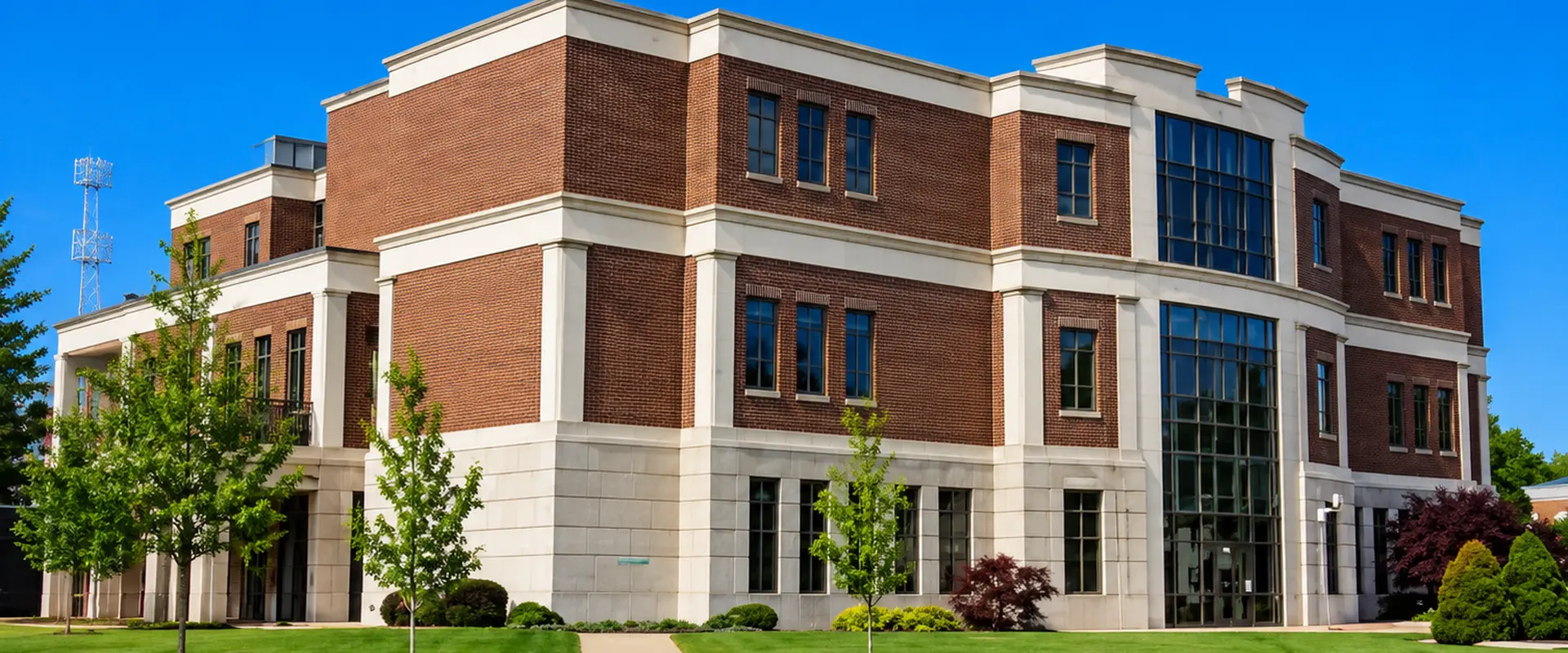
Clinton County Courthouse
Houses the County Circuit Court and all the other court offices, making it the judicial center of the county, where minor and major cases within the county are presided over, including criminal and traffic cases, housing and property cases, civil cases, juvenile cases, and family law cases.
Carlyle
Address: 850 Fairfax Street, Room 220, Carlyle, IL 62231
Phone: (618) 594-6615 (direct) or (618) 594-2464 ext. 620
Email: circlerk@clintonco.illinois.gov
County State's Attorney: (618) 594-6645
County Public Defender: (618) 594-6600
Legal Help and Self-Help Resources
Clinton County residents have access to multiple legal aid resources through a mix of non-profit organizations, state-supported facilities and platforms, and county-provided programs. These are designed to help residents navigate through the county court systems smoothly. It is important to note that Southern Illinois has a known shortage of attorneys, especially within rural counties such as Clinton County, which makes legal aid programs and self-help tools an essential safety net for residents who cannot easily find or afford legal counsel locally.
 Free Legal Assistance
One of the main sources of free legal aid services to Clinton County residents is the Land of Lincoln Legal Aid (LLLA) non-profit organization, which offers free civil legal services to low-income individuals within the county. The organization covers cases such as family law, consumer law, housing law, elder law, disability cases, education and health cases, and economic security cases. The organization does not cover any criminal cases, including traffic cases, personal injury cases, malpractice, or workers' compensation. Residents of Clinton County also have access to the free state-wide self-help resource, the Illinois Legal Aid Online platform, which offers free legal information, easy form programs, and referrals statewide.
 Local Legal Support
Residents also have access to local legal support from law school-run clinics such as the SIU Simmons Law School in Carbondale, which runs an award-winning clinic that covers civil practice legal matters, including estate planning, guardianship and elder law, juvenile justice, and new immigration clinics. Residents also have access to volunteer attorney programs through the Southern Illinois Regional Family Law Pro Bono Project, which matches volunteer law students with volunteer attorneys to provide free legal services to indigent clients in Clinton County and across the Southern Illinois region.
FAQs
How do I attend a Clinton County court hearing remotely?
The Clinton County Circuit Clerk publishes courtroom Zoom links on its Zoom Links page, letting parties, attorneys, and witnesses appear without traveling to Carlyle. Whether remote attendance is permitted for a specific hearing depends on the assigned judge and case type, so confirm in advance through the case docket by calling the Circuit Clerk.
What's the difference between the Clinton County Circuit Clerk and the County Clerk & Recorder?
The Circuit Clerk maintains all court-related records, case files, judgments, fines, and filings for the Clinton County Circuit Court. The County Clerk & Recorder handles non-court records, including birth, marriage, and death certificates, voter registration, real estate recordings, and assumed name certificates. They are separate offices with separate phone lines, both housed in the courthouse at 850 Fairfax Street, Carlyle.
Can I get my Clinton County criminal record expunged or sealed?
Yes, if the case qualifies under Illinois law. Eligible petitioners file a Petition to Expunge with the Circuit Clerk. The Circuit Clerk's resources page explains eligibility and supporting documents. Juvenile records are confidential by statute, and some adult records may automatically qualify for sealing eligibility, which varies by offense and outcome.
How do I find an old Clinton County court record?
Records predating Clinton County's electronic case management often exist only in physical form. The Illinois Regional Archives Depository at Southern Illinois University holds Clinton County's archival court files, chancery (divorce), criminal case files, probate records, and more. Commercial aggregators like CourtCaseFinder can also help locate older filings pulled together from multiple sources when someone is unsure which office holds what.
Which court handles cases involving incidents on Carlyle Lake?
It depends on the type of incident and where on the lake it occurred. The Clinton County Circuit Court handles civil, criminal, and traffic matters arising within the county's portion of the lake. Federal jurisdiction may apply to U.S. Army Corps of Engineers-managed waters, and small portions of Carlyle Lake extend into Bond and Fayette counties, which use their own circuit courts.
Other Counties in Illinois
- Adams
- Alexander
- Bond
- Boone
- Brown
- Bureau
- Calhoun
- Carroll
- Cass
- Champaign
- Christian
- Clark
- Clay
- Coles
- Cook
- Crawford
- Cumberland
- Dekalb
- Dewitt
- Douglas
- Dupage
- Edgar
- Edwards
- Effingham
- Fayette
- Ford
- Franklin
- Fulton
- Gallatin
- Greene
- Grundy
- Hamilton
- Hancock
- Hardin
- Henderson
- Henry
- Iroquois
- Jackson
- Jasper
- Jefferson
- Jersey
- Jo Daviess
- Johnson
- Kane
- Kankakee
- Kendall
- Knox
- La Salle
- Lake
- Lawrence
- Lee
- Livingston
- Logan
- Macon
- Macoupin
- Madison
- Marion
- Marshall
- Mason
- Massac
- Mcdonough
- Mchenry
- Mclean
- Menard
- Mercer
- Monroe
- Montgomery
- Morgan
- Moultrie
- Ogle
- Peoria
- Perry
- Piatt
- Pike
- Pope
- Pulaski
- Putnam
- Randolph
- Richland
- Rock Island
- Saint Clair
- Saline
- Sangamon
- Schuyler
- Scott
- Shelby
- Stark
- Stephenson
- Tazewell
- Union
- Vermilion
- Wabash
- Warren
- Washington
- Wayne
- White
- Whiteside
- Will
- Williamson
- Winnebago
- Woodford
Table of Contents
