Table of Contents
Clark County Courts, IL *

Clark County, situated in the central region of Illinois, is one of the least-populated counties in the state, with about 15 townships. Within Illinois's judicial system, the Fifth Judicial Circuit includes Clark County. Both businesses and individuals can trust the local court system to maintain fairness, settle disputes, uphold rights, enforce laws, and process estates. Each business, attorney, resident, or visitor can file the appropriate documents with the court when involved in or pursuing legal action. Civil matters, criminal proceedings, family law cases, and estate proceedings are among the types of cases heard locally.
Accessing court information or resources is sometimes critical to an individual's attempt to obtain information about the facts of the case or the required steps to appear before a judge. Understanding the local court system can save individuals valuable time, reduce potential filing errors, and improve their access to legal matters by educating them about how it works.
Overview of the Clark County Court System
The court system for Clark County falls within the unified three-tiered Illinois judicial system, comprising the Illinois Circuit Courts, the Illinois Appellate Court, and the Illinois Supreme Court. All legal issues in Clark County first enter the Circuit Court, the county's trial court. Clark County is within the Fifth Judicial Circuit, and the court has authority under Illinois law and hears cases in Civil, Criminal, Family, Probate, Juvenile, and Traffic law. Since Illinois has a unified Circuit Court structure, various divisions within that court handle different areas of law.
The Clark County Courthouse is the hub of court services in the county and is located in Marshall. The courtrooms and the Circuit Clerk's office are located at the courthouse, and various other court services are available there as well. The Circuit Clerk's office handles the filing of legal documents, maintains court records, collects fees, and can offer limited assistance with court procedures. Court users can download court forms, access local court rules, use e-filing options, and retrieve case information from county and Illinois court systems online.
Types of Courts in Clark County, Illinois

The Fifth Judicial Circuit Court is the trial court for Clark County, which handles most county matters. Within the Circuit Court are various divisions that handle specific types of legal matters. It is important to file a case in the correct court, as filing the case in the wrong court can lead to long delays, additional expenses, and complications.
 Circuit Court
The County's main court for initial trials is the Fifth Judicial Circuit Court, where legal cases are handled through different divisions of the court.
The jurisdiction of the Circuit Court includes:
- Civil cases
- Criminal offenses
- Family Law cases
- Probate matters (wills and estates)
- Juvenile cases
- Traffic violations
- Orders of Protection
- Small Claims cases
The Fifth Judicial Circuit Court is a general-jurisdiction court, which means it hears most of the legal cases in Clark County. Rather than being several different courts at the county courthouse, Civil, Criminal, Family, and Probate courts are simply divisions of the same Circuit Court.
Primary Location: Clark County Courthouse
 Civil Division
This division deals with civil disputes between individuals, companies, organizations, and the government. It handles cases including:
- Contracts dispute
- Personal injury claims
- Land dispute
- Landlord and tenant dispute
- Small claims actions
- Collections
Civil cases typically seek an award of money or an order from the Court requiring someone else to take action or refrain from taking action in the matter. Some matters settle or go to mediation, and other cases proceed to a bench trial where a judge will hear evidence and law and make an Order.
 Criminal Division
This division handles all types of criminal matters within the county. Some of the cases it handles include:
- Felonies
- Misdemeanors
- Criminal Traffic Violations
- Arraignments
- Preliminary hearings
- Sentencing hearings
- Juvenile delinquency
The matters in the division run from the time charges are filed until the case is dismissed, a guilty plea is entered, or an acquittal is rendered at trial. Defendants in these cases receive constitutional protections, including the right to representation by an attorney and to a fair trial.
 Family Division
The Family Division handles legal actions involving family, including parents and children.
The Family Court is authorized to deal with the following:
- Divorce cases
- Child support, custody, and visitation
- Paternity of children
- Protection orders
- Disputing in the family
A characteristic feature of Family law is the ongoing role the court may play in each case because each situation involving a child or children and families can be different and may vary throughout the lifetime of a child and family. When there are issues relating to custody and parenting orders, judges rule according to the Illinois Child Custody Laws and in the best interest of the child.
 Probate Division
The Probate Division manages the estates of deceased persons, conservatorships of wards, guardianship of minors or disabled persons, and related disputes.
Probate Court deals with the following:
- Probate of wills
- Estates administration
- Guardian for minor children
- Guardian for disabled adults
- Dispute over trusts
- Litigation regarding estates
The probate court process ensures that assets are administered either under a legally sound will or under the statutes of the state of Illinois governing the inheritance of estates. Judges oversee executors, administrators, conservators, and guardians of wards when needed. They mediate disputes relating to the estate and review any legal action involving an estate and the guardianship or conservatorship for those who cannot handle their own affairs.
How to Access Clark County Court Records

Most court records in Illinois are public, though some are not available under laws that require restricted or sealed records. These would include certain juvenile records, some adoption records, specific mental health cases, and court-order-sensitive matters. Public records are accessible online, which is a very efficient way to access court records, though some records are still only available through physical requests. One may incur costs for obtaining these records, particularly certified copies.
 Online Access
The state of Illinois offers electronic access to many court records through the state and county court access sites. The public, attorneys, and authorized agencies can use re:SearchIL, a single unified portal to access public court records. Through online access, the user may view information about the case docket before going to the courthouse. These online sites provide broader access to court records, including civil and criminal records.
When searching for a court record online, one should compile as many identifiers as possible before beginning the search. Useful identifiers include the full names of the parties, the approximate dates of filing, the case number, and the case type.
 Alternative Online Options
Though official court documents can be retrieved through court systems, many people find that statewide systems are difficult to use, even when they know where to find the record they need. In such situations, they should consider alternative online platforms like CourtCaseFinder, which compiles information from multiple sources. This enables a user to look up and get public court records, case information, arrests, civil filings, and public records from across the entire County. They are also useful when one doesn't have much information or is a first-time user and wants something easier to utilize than official court sites.
 In-Person Requests
Those who require certified copies, case files, or specialized requests can request them in person at the Circuit Clerk's office in the county courthouse. The staff at the Clark County Circuit Clerk's Office can help find:
- Archived Records
- Certified copies of documents, including marriage certificates
- Physical case files
Citizens must bring information about the record they need, including case numbers, party names, and approximate filing dates, when visiting the office to make in-person requests. The case details will help speed up the search and ensure the search results are accurate. Also, the staff can offer guidance on accessing procedures and records.
 Archived Records
Not all court records are available online because some older and historical records are maintained in physical files or in the records archiving system. They can be accessed through the Illinois Regional Archives Depository (IRAD) System, with the office serving Clark County located at Eastern Illinois University in Charleston. One can also find older records, including divorce files, through the Circuit Clerk's office. Those who require such case records, including researchers and genealogists, should visit the Circuit Clerk's office and bring as much identifying information as possible. Obtaining archived records requires a formal request and may take time, so it is advisable to submit early requests to allow sufficient time to retrieve them and avoid delaying the processing of their cases.
For Attorneys and Legal Professionals
Attorneys practicing in Clark County rely on the statewide courts and local clerk procedures to protect the interests of the parties they represent. They benefit from understanding the Fifth Judicial Circuit Rules and the local court rules, schedule, and filing requirements in Clark County. They also adhere to the Illinois electronic filing rules. Attorneys must electronically file most civil cases in Illinois and routinely use the e-filing systems to transmit pleadings, search case files, and track case status. The ability to retrieve and review records electronically and track case movement online enhances the efficiency of attorneys working in this county.
Visiting attorneys and legal professionals are advised to review local administrative orders, courtroom etiquette, scheduling procedures, filing practices, and any special rules and regulations to avoid delays due to unfamiliarity and to enhance case preparation. It is recommended to coordinate with the Circuit Clerk's office regarding the court schedule, filing, and access to court records.
How to File a Case in Clark County

Filing a case in Clark County requires close attention to court processes, time limits, and documentation. The procedure will differ slightly depending on what one is filing, but most filings will pass through a similar system within the Circuit Courts. Individuals should know which division to file their claim in and gather the right information at the start, as it can prevent delays, extra costs for refiling, or dismissal of the case.
Step 1: Choose the Correct Court
First and foremost, one must know which division of the Clark County Circuit Court to file in. A Civil suit concerning a contract, money damages, landlord-tenant issues, or property damage typically belongs in the Civil Division. A criminal charge belongs in the Criminal Division. Matters of Divorce, support, custody, and domestic relations issues belong in the Family Division. Wills, estates, and guardianships belong in the Probate Division.
 Step 2: Complete Required Forms
Once the proper division is determined, forms are obtained and completed accurately. Most forms can be found at the state's Circuit Court Standardized Forms page for all court cases accepted in the circuit court. They are also available through the Illinois Legal Aid Online E-filing forms page, which includes a library of court forms and other legal documents for various legal issues. The required forms must be completed carefully with correct names, addresses, dates, and case information. Sometimes, supporting documents like contracts, court orders, financial records, or certificates must also be submitted with the paperwork, depending on the case.
 Step 3: File the Case
Once all the paperwork is finalized, they are filed with the Clark County Circuit Clerk. Both attorneys and self-represented litigants can file their cases online through the EfileIL, a statewide e-filing portal. There is mandatory e-filing for civil matters in the 5th Judicial Circuit Court, which applies statewide. The circuit clerk reviews the documents and may reject them for filing or accept them for filing, then assign a case number and formally enter the matter on the court's dockets. Copies of all filings should be made and kept for future reference. Self-represented individuals who are finding it challenging to file their cases can seek guidance on the Information for Filers Without Lawyers website.
 Step 4: Pay Filing Fees
When the documents are filed with the court clerk, one must pay filing fees. This fee is based upon the type of case and any additional services rendered, such as the issuance of a summons or certified copies of the pleadings. Because fee schedules are subject to revision, anyone intending to file should confirm fees with the Clerk of the Circuit Court. Individuals who cannot afford the filing fees can complete a fee waiver application through the Illinois Legal Aid Online Fee Waiver platform to request a fee waiver for criminal and civil cases. It is recommended to provide proof of financial hardship when submitting the fee waiver request.
 Step 5: Serve the Other Party
Once a case is filed, the opposing party has to be served with a legal notice. This notification is done through a process called "service of process." The documents can be served by the sheriff, a licensed private detective, or an authorized private process server. Until the complainant has legally served the respondent, the court can not proceed with the case. The person serving the documents must prepare and file with the court an affidavit or proof of service indicating how and when the papers were served, so the judge knows all the notice requirements have been met.
 Step 6: Monitor the Case
Finally, after the case has been filed successfully, the parties must continuously track court notices, hearing dates, filing deadlines, motions, and all other court developments throughout the course of the case. Case monitoring can be done through re:SearchIL, a statewide portal for court records, or by contacting the office of the Circuit Clerk. To access the records, one must provide the case number assigned by the clerk after filing the legal issue. It is crucial to track the case because failure to attend court hearings or meet filing deadlines may result in adverse outcomes, such as dismissal of the claim or default judgments.
Clark County Courthouse Directory
Clark County Courthouse
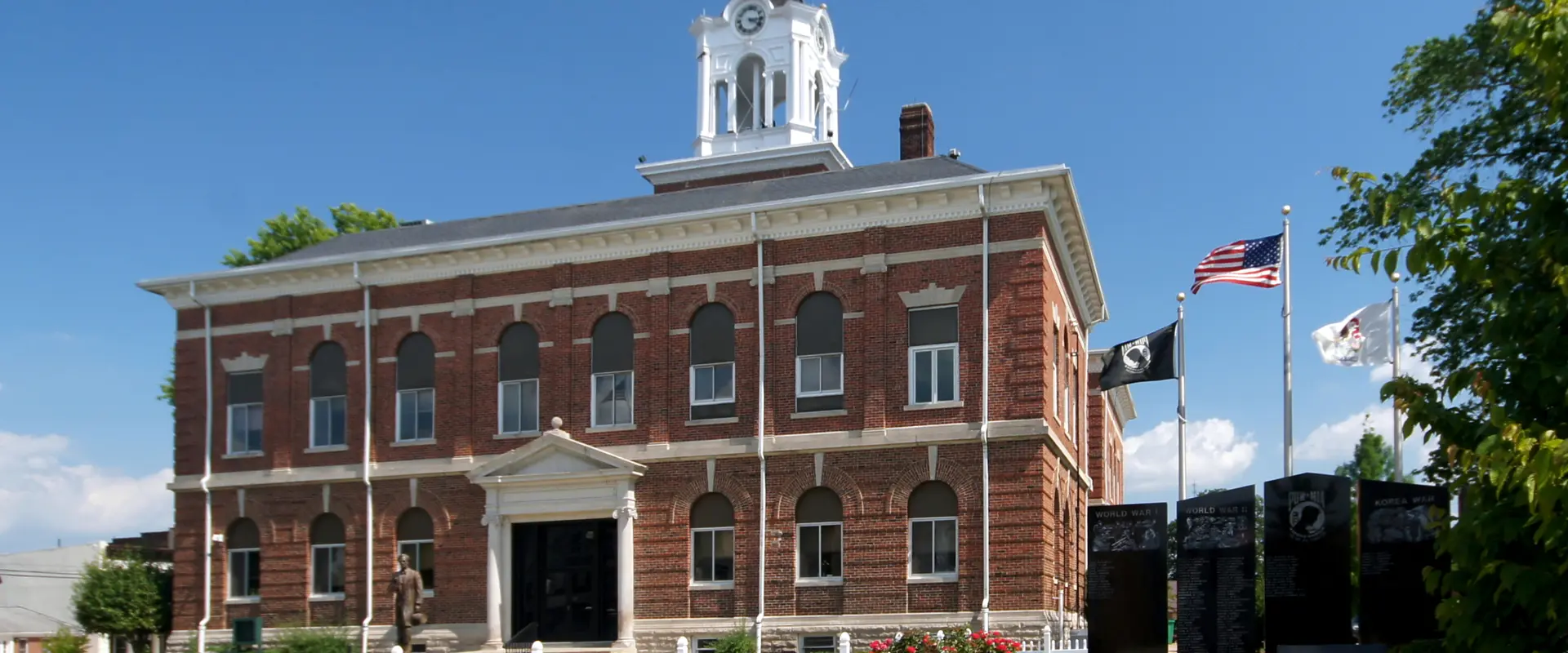
The Clark County Courthouse is the county's courthouse and seat of the county court system. This court contains the Circuit Court and all the civil, criminal, family, and probate divisions. Also found at this courthouse is the Circuit Clerk's office, which is responsible for managing court files, court filings, and requests for certified copies.
Marshall
Address: 501 Archer Ave. Marshall, IL 62441
Phone: (217) 826-2811
Website: Clark County Circuit Court
Legal Help and Self-Help Resources
There are legal help organizations and resources available at the state and local levels to assist individuals who require assistance, legal representation, or information processing. The type of assistance offered is not limited to low-income individuals; it is also available to veterans, senior citizens, researchers, pro se litigants, and those experiencing unique or complex legal situations.
 Free Legal Assistance
Illinois Legal Aid Online offers free legal information, forms, instructions, and self-help guides on a vast array of legal subjects. This program helps individuals understand procedures and fill out court documents. There is also the Land of Lincoln Legal Aid, which offers free legal services to eligible individuals, particularly low-income and elderly individuals throughout central and southern Illinois, including Clark County. Legal assistance includes landlord-tenant law, family law, consumer law, public benefits law, and other civil law matters.
Clerks of the court can aid patrons in understanding the judicial process by providing instructions, forms, filing advice, and process information, although clerks are prohibited from giving legal advice or suggesting legal strategies.
 Local Legal Support
Local resources in Clark County for individuals needing legal aid are attorney referral services, volunteer legal programs, and regional legal aid services, including the voluntary Illinois State Bar Association, which offers local legal support and attorney referrals through regional networks. Specific services are available to veterans from organizations such as the American Legion Post 90, a non-profit organization that supports veterans and service members with legal issues. Seniors can utilize various services, such as Life Center Senior Services, accessible through the Circuit Clerk's office, that address estate planning, housing issues, guardianships, consumer fraud, and public benefits.
FAQs
How do I look up a court case in Clark County?
Court files can often be researched via re:SearchIL website or by directly contacting the Clark County Circuit Clerk's Office. Case numbers will make it easiest to look up records, but party names and dates can also be used for searches. Not all court files are available online, and an in-person request may be required for some files. Certified copies are usually obtainable only through the Clerk's Office.
Is it okay to pursue a small claims suit without an attorney?
Yes. The small claims procedure does not require the use of lawyers, so it may also proceed without counsel to the extent the party wishes to proceed pro se. It may still benefit parties who pursue them to be knowledgeable about the rules governing filing, pleading, and evidence so they can properly do so.
What can I do if I cannot pay the filing fees?
Those who cannot afford court filing fees may qualify for a waiver. They can reapply for fee waivers by submitting forms and detailed information about income, assets, liabilities, and expenses to demonstrate financial hardship. The court will then decide whether to waive the fees or reduce them.
When would I consider using a third-party search site?
Third-party searches like CourtCaseFinder could be used to find court files across multiple jurisdictions when there is not yet a firm grasp of where the file was filed, or as part of a more extensive document search. These commercial platforms are also helpful when one finds navigating official sites overwhelming.
What records can researchers and genealogists find through Clark County courts?
Researchers and genealogists can access historical estate files, probate records, guardianships, property disputes, and civil suits filed in Clark County to research local history or genealogical data. These can be accessed at the Illinois Regional Archives Depository (IRAD) System or through the Circuit Clerk's office. The more specific information one has before conducting research, the more efficient it will be to find the record one requires.
Other Counties in Illinois
- Adams
- Alexander
- Bond
- Boone
- Brown
- Bureau
- Calhoun
- Carroll
- Cass
- Champaign
- Christian
- Clay
- Clinton
- Coles
- Cook
- Crawford
- Cumberland
- Dekalb
- Dewitt
- Douglas
- Dupage
- Edgar
- Edwards
- Effingham
- Fayette
- Ford
- Franklin
- Fulton
- Gallatin
- Greene
- Grundy
- Hamilton
- Hancock
- Hardin
- Henderson
- Henry
- Iroquois
- Jackson
- Jasper
- Jefferson
- Jersey
- Jo Daviess
- Johnson
- Kane
- Kankakee
- Kendall
- Knox
- La Salle
- Lake
- Lawrence
- Lee
- Livingston
- Logan
- Macon
- Macoupin
- Madison
- Marion
- Marshall
- Mason
- Massac
- Mcdonough
- Mchenry
- Mclean
- Menard
- Mercer
- Monroe
- Montgomery
- Morgan
- Moultrie
- Ogle
- Peoria
- Perry
- Piatt
- Pike
- Pope
- Pulaski
- Putnam
- Randolph
- Richland
- Rock Island
- Saint Clair
- Saline
- Sangamon
- Schuyler
- Scott
- Shelby
- Stark
- Stephenson
- Tazewell
- Union
- Vermilion
- Wabash
- Warren
- Washington
- Wayne
- White
- Whiteside
- Will
- Williamson
- Winnebago
- Woodford
Table of Contents
