Table of Contents
Bureau County Courts, IL *

Bureau County is in north-central Illinois, a mostly rural area of prairie and farmland west of the Illinois River. Princeton is the county seat, and Bureau County courts fall within the 13th Judicial Circuit. The types of cases heard are criminal, civil, family, probate, traffic, and small claims. Bureau County gets its name from a French trader who traded with American Indians in the area.
Court records are often used to confirm judgments, check background information, and conduct family research. Court records are of interest to landlords, employers, and genealogists. Since Illinois has a unique court structure, knowing the location of the records will be helpful to a researcher and prevent wasted time.
Overview of the Bureau County Court System
Illinois utilizes a singular, three-tier court system. This system encompasses the Illinois Supreme Court, the Appellate Court, and the Circuit Courts, where every case begins. Bureau County maintains a single trial court: Bureau County Circuit Court. This is one of three courts in the 13th Judicial Circuit, which comprises Bureau, Grundy, and LaSalle Counties.
In general, the Circuit Clerk is the keeper of criminal, civil, probate, juvenile, and child support court files. The County Clerk and Recorder is responsible for land and marriage records. Knowing the difference between the records each officer keeps will save valuable research time.
Types of Courts in Bureau County, Illinois

Instead of separate probate, family, or municipal courts (as many other states have), Illinois features a single court of general jurisdiction, the Circuit Court, which divides its workload among divisions by subject matter. All records go through the Circuit Clerk, no matter what division they're in.
 Circuit Court
The Bureau County Circuit Court is the only court in the county and has general jurisdiction. That is, it hears all classes of cases, from the citation of a speeding car to the litigation over an estate, with no divided courts. It has terms of court held at the Bureau County Courthouse in Princeton.
Jurisdiction includes:
- Felony and misdemeanor criminal prosecutions
- Traffic citations and DUI cases
- Small claims for amounts up to $10,000
- Evictions and landlord-tenant disputes
- Divorce, custody, and support matters
- Larger civil lawsuits and foreclosures
- Probate of wills and administration of estates
- Guardianship of minors and disabled adults
Within the court itself, case files are divided into criminal, civil, family, and probate divisions, but records for all divisions pass through one custodian: the Clerk of the Circuit Court. Probate records date back to 1837, and naturalization records (which are normally filed in federal records at the federal court level) are filed in the back office, where genealogists can examine them in person or order copies to be mailed. This grouping of records eliminates many hassles with record requests.
How to Access Bureau County Court Records

Bureau County Court Records are generally public according to Illinois law. There are exceptions for juvenile, adoption, mental health, sealed, and some confidential records that are available only to authorized parties. To access a public Bureau County Court Record, search online or make a formal request to the court office.
 Online Access
For immediate lookup of current or prior cases, the Bureau County Circuit Clerk offers an online record search on its website, which allows searches by case name and case number to return the docket history for civil, criminal, traffic, and other types of cases. The site indicates it is for ease of use only and is not a replacement for an official court file located at the Courthouse. Court files marked as sealed or suppressed will not be shown in online dockets.
Statewide in Illinois, researchers use the r e:SearchIL website, which serves as a central repository for Illinois court records and is connected to the statewide electronic filing system. Access to any records will depend on the Illinois Remote Access Policy, which requires residents to register as users, though primary access, including access to documents filed electronically, is granted to the attorney and party in the specific case. Litigants are guided through access by linking through the Illinois eServices hub, where the eFiling, eDockets, and eSearch functions are combined.
 Alternative Online Options
While the Bureau County Circuit Clerk website does an excellent job consolidating its files, its effectiveness as a tool for finding any record can be limited if the searcher is unsure if a matter was filed in Bureau, LaSalle, or Grundy counties, since they are all handled by the same judicial circuit. When using any county website to search for a court file, the same search must be run independently in three different portals to find any related matter, unless using the Bureau County website to find the most direct path to a file. Instead, the commercial website CourtCaseFinder allows researchers to perform one search that retrieves any matching court files, arrest records, and other public filings from multiple jurisdictions simultaneously. This search should be used as a preliminary step before making any request for an official or certified document from the Circuit Clerk's Office.
 In-Person Requests
Certified copies and historical documents require an appearance at the Circuit Clerk's Office in the Bureau County Courthouse in Princeton. It's possible for them to find a file, determine its availability, and make a certified copy. A fee, set by the office, applies to the copying service. There is also an on-site terminal in the front office where patrons conduct their own research. Including as many full names as needed, roughly the date needed, and, if possible, the case number can expedite finding a record. Anyone with questions about how to search for records can receive free assistance by calling or texting Illinois Court Help or by calling or visiting the Circuit Clerk's Office.
 Archived Records
Bureau County's resources are extensive: The oldest existing probate records date to 1837, and the Circuit Clerk's back office maintains naturalization records for genealogical purposes. The earliest records are in paper form only and are stored on lower floors. Hence, retrieval can take a little longer. Archived records throughout Illinois are searchable online via the Illinois Regional Archives Depository system. For genealogy or historical property questions, supplementing the holdings in the Circuit Clerk's office with archival information will yield the most comprehensive results.
For Attorneys and Legal Professionals
Attorneys handling a Bureau County case will primarily use the Circuit Clerk's website for all checks, status inquiries, and searches, and re:SearchIL for those they have electronically filed themselves. For all Illinois civil cases, the Illinois Supreme Court requires that they be electronically filed with the circuit clerk's office through the eFileIL system, which submits documents via an approved Electronic Filing Service Provider. Criminal, traffic, and other quasi-criminal matters are still somewhat unique in their processes, so confirming with the clerk is important before submission, lest one receive a filing rejection.
A filer who cannot use e-filing can opt for paper filing. One will need to present a Certificate of Exemption for E-Filing as per Illinois Supreme Court Rule 9(c)(4). As with any court filing, the submission must comply with the Illinois Supreme Court Rules and the local rules of the 13th Judicial Circuit. Since the circuit comprises three counties, an attorney practicing in all three (Bureau, La Salle, and Grundy) will need to check the local procedures of all the courts regarding scheduling and remote appearances. The Court is accepting approved Zoom appearances for many hearings, but the appearance must be arranged in advance through the Circuit Clerk's office. Those seeking certified or archival records should note that there are varying timelines for obtaining them, particularly for older, paper-based estate filings.
How to File a Case in Bureau County

Filing a case in Bureau County and retrieving records are offered through the Circuit Clerk's Office. Residents who file in the wrong division or file a case incorrectly could experience delays or even dismissal. The process for filing a civil case is as follows:
Step 1: Choose the Correct Court
Because the Circuit Court in Illinois hears all cases at the county trial court level, the first decision a filer needs to make is which division of the court to file in. For monetary cases within the amount prescribed by statute, one utilizes the Small Claims Division; for more substantial cases, the Civil Division is used. Divorce cases and child custody issues are heard in Family Law; estate cases are heard in Probate. The suit is typically brought in the county where the defendant resides or where the cause of action occurred. An informed choice will save a filer from later seeking a transfer or getting their case dismissed.
 Step 2: Complete Required Forms
Illinois publishes standardized statewide court forms for many types of cases, and the Circuit Clerk keeps some forms on file as well. Free forms and clear instructions are obtained through Illinois Legal Aid Online. Each form should be completed in clear handwriting, signed where required, and submitted with any supporting documents, as incomplete documents are one of the main causes of rejection of a filing. And if residents have questions about completing the required forms, they can always call or visit the Circuit Clerk's Office.
 Step 3: File the Case
Civil cases are e-filed through an eFileIL provider from one's home, office, or a public computer terminal. Paperwork is filed with the Circuit Clerk's Office by a self-represented filer who is eligible for an exemption. And in any event, the clerk will examine the paperwork before filing and note if there is a problem. After the filing is complete, it's important to keep the case number and a file-stamped copy.
 Step 4: Pay Filing Fees
The filing fees vary by case and are subject to change, so it's best to request the most recent fee schedule from the Circuit Clerk. Filers without the necessary funds to cover the filing fee should submit an Application for Fee Waiver using the standardized form. The applicant must seek relief from the court based on indigency. It is important to note that the judge must sign the application before the case is filed.
 Step 5: Serve the Other Party
Once a document is filed, the other party must be properly notified through service of process, which is typically handled by the county sheriff or a special process server appointed by the court. Generally, the filer cannot perform the service, and a proof of the service must be filed with the court. If proof of service is not included in the court file, the case will be postponed or dismissed.
 Step 6: Monitor the Case
After serving the opposing party, the plaintiff should keep updated on the progress of the case. Hearing dates and deadlines can change, so a filer should regularly check the Circuit Clerk's online search function to avoid missing an appearance and risking a default judgment in a civil case. For approved telephonic and virtual hearings, litigants should confirm the correct Zoom courtroom.
Bureau County Courthouse Directory
Bureau County Courthouse
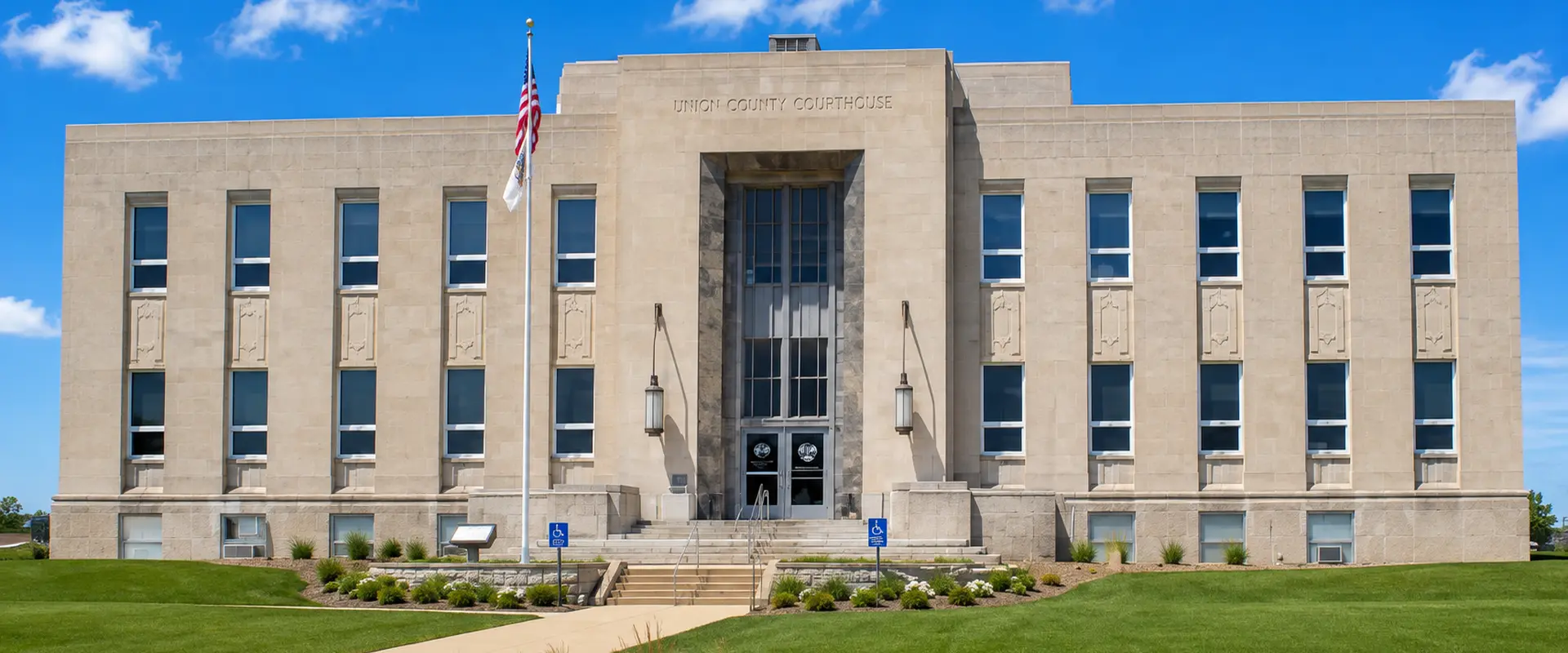
The courthouse in Princeton contains the Circuit Court and the Clerk of the Circuit Court's office.
Princeton
Address: 700 South Main Street, Princeton, IL 61356
Phone: (815)-872-2001
Website: Bureau County Circuit Court
Legal Help and Self-Help Resources
Bureau County has multiple resources, not just for indigent residents but also for veterans, seniors, domestic abuse victims, and those with any complex legal issue.
 Free Legal Assistance
Prairie State Legal Services offers free civil legal aid and assistance to qualifying low-income, senior, and disabled persons in north-central Illinois, including Bureau County. Services offered address housing, family, public benefits, and consumer law. The closest available manned office is in Ottawa. All residents may use free civil legal aid resources from Illinois Legal Aid Online, a service that offers legal information, form assistance, and self-help resources for those without an attorney.
Domestic violence is a sensitive topic, and Freedom House serves the county and its neighbors. They offer a 24-hour hotline, emergency housing, and legal advocates, and the court will help with an order of protection. Veterans can utilize the Veterans Benefits Administration and the Illinois Department of Veterans' Affairs. Elderly citizens obtain legal information through seniors' resources from Illinois Legal Aid Online.
 Local Legal Support
Pro se litigants can also locate forms, instructions, and plain-language explanations at the statewide resource, Illinois Court Help, and on the standard forms printed by the Illinois Supreme Court. Circuit Clerk employees can explain processes and assist with locating the correct form, but cannot provide legal advice. If a litigant chooses to seek an attorney, the Illinois State Bar Association offers a lawyer referral service to connect individuals to an attorney by practice area.
FAQs
How can someone search Bureau County court records online?
The simplest option, and one of the few methods of accessing dockets directly, is the Bureau County Circuit Clerk's online record search system, which allows searches by name or case number and provides dockets for Civil, Criminal, Traffic, and other case types. The Circuit Clerk advises that this system is a digest, not a substitute for the courthouse file, and that suppressed or sealed records will not be shown. E-filed documents are accessible through the statewide re:SearchIL database. Full-text access to documents is available only to registered users under the Illinois Remote Access Policy.
Who keeps marriage and property records in Bureau County?
These are not handled through the court system. Marriage licenses, deeds, property records, and other vital records are handled by the County Clerk and Recorder, not the Circuit Clerk. This causes considerable confusion, as the offices are located in the same courthouse in Princeton. If a citizen needs a marriage or land record, they should start with the County Clerk and Recorder. If a person needs court records, they should start at the Circuit Clerk.
How far back do Bureau County records go, and can genealogists use them?
Rather far. The Circuit Clerk's office has probate records dating back to 1837, and the back office also houses naturalization records that the genealogist can study in person and copy. New cases are stored digitally; old records often exist only on paper. The courthouse records combine nicely with the Illinois Regional Archives Depository system for in-depth family history research.
What is the limit for a small claims case?
In Illinois, small claims cases involve monetary disputes of up to $10,000, excluding interest and court costs, in accordance with Illinois Supreme Court Rule 281. The system is streamlined and is designed to be handled without a lawyer. Monetary cases where the dispute is over $10,000, and cases requesting relief other than money, go to the regular civil division. The Circuit Clerk can tell a filer before they fill out paperwork.
Where should a search begin when only a name is known, and the filing county is unknown?
Bureau County is in the same judicial circuit as La Salle and Grundy Counties, so anyone from northern central Illinois involved in a case might be at any of the three county courthouses. Doing the same name search at three different county web portals takes too long and may not turn up older paper files. A helpful platform, such as CourtCaseFinder, searches through records of numerous courts simultaneously, providing the case, county, and court where a file is located, therefore narrowing the search.
Other Counties in Illinois
- Adams
- Alexander
- Bond
- Boone
- Brown
- Calhoun
- Carroll
- Cass
- Champaign
- Christian
- Clark
- Clay
- Clinton
- Coles
- Cook
- Crawford
- Cumberland
- Dekalb
- Dewitt
- Douglas
- Dupage
- Edgar
- Edwards
- Effingham
- Fayette
- Ford
- Franklin
- Fulton
- Gallatin
- Greene
- Grundy
- Hamilton
- Hancock
- Hardin
- Henderson
- Henry
- Iroquois
- Jackson
- Jasper
- Jefferson
- Jersey
- Jo Daviess
- Johnson
- Kane
- Kankakee
- Kendall
- Knox
- La Salle
- Lake
- Lawrence
- Lee
- Livingston
- Logan
- Macon
- Macoupin
- Madison
- Marion
- Marshall
- Mason
- Massac
- Mcdonough
- Mchenry
- Mclean
- Menard
- Mercer
- Monroe
- Montgomery
- Morgan
- Moultrie
- Ogle
- Peoria
- Perry
- Piatt
- Pike
- Pope
- Pulaski
- Putnam
- Randolph
- Richland
- Rock Island
- Saint Clair
- Saline
- Sangamon
- Schuyler
- Scott
- Shelby
- Stark
- Stephenson
- Tazewell
- Union
- Vermilion
- Wabash
- Warren
- Washington
- Wayne
- White
- Whiteside
- Will
- Williamson
- Winnebago
- Woodford
Table of Contents
